


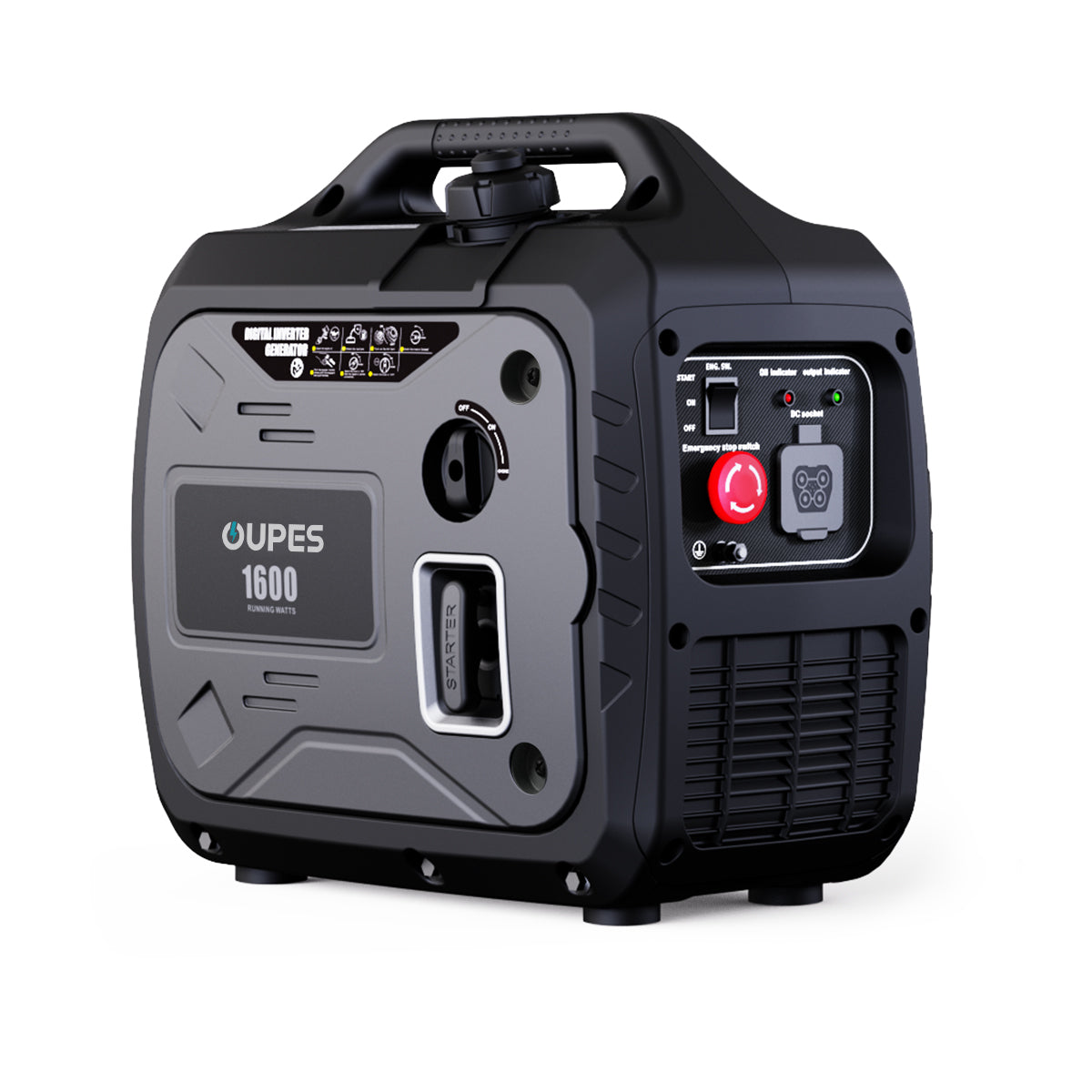


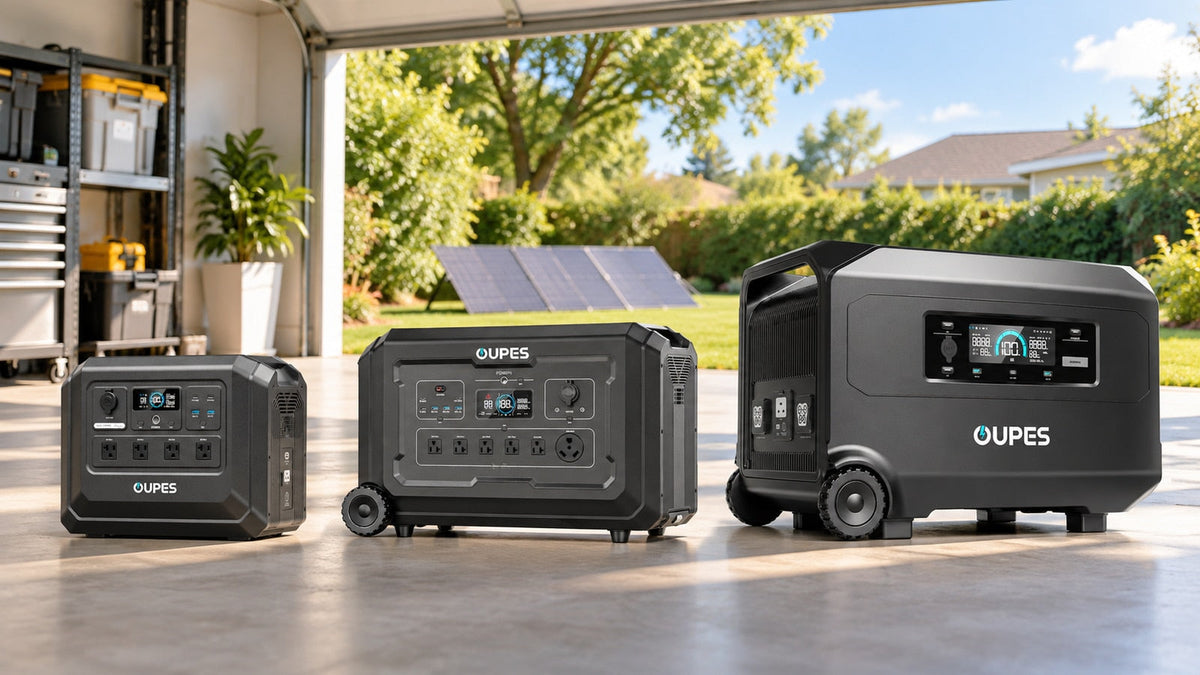
Choose a solar generator wattage from the largest group of appliances that must run at the same time, then choose battery capacity from the energy those appliances use over the required hours. An 800W class suits electronics and selected low-power appliances; 1500W adds room for many countertop devices; 2400W covers a broader group of 120V loads; 3000W class systems provide more headroom for demanding combinations; and 5000W class systems belong to larger home, workshop or 120/240V plans. The label does not tell you runtime or solar recharge speed.
Key Takeaways
- Watt class describes inverter output, while Wh or kWh describes stored energy.
- Use continuous output for sustained loads and verify motor startup separately.
- Move up a class when required simultaneous loads leave too little operating margin.
- Size the panel array from daily energy and the station's electrical input limits.
- A higher watt class may require heavier hardware and a more deliberate home connection plan.
Separate Inverter Watts, Battery Watt-Hours and Panel Watts
A “2400W solar generator” usually refers to the power station's rated AC output, not a 2400W solar panel array and not a 2400Wh battery. A system might combine a 2400W inverter with roughly 2.2kWh of storage and accept substantially less than 2400W of solar input. Keep three rows in your worksheet: AC output in W, battery capacity in Wh, and maximum compatible solar input in W with its voltage and current limits.
Continuous output supports loads that remain on. Surge or boost specifications describe limited behavior under stated conditions and should not be treated as a larger continuous rating. For motors, compressors and pumps, verify the actual startup requirement and how the station handles it.
Browse solar generator configurations only after these quantities are separate. Product bundles can include panels, but the exact panel count and cables vary by configuration.
Compare 800W, 1500W, 2400W, 3000W and 5000W Classes
| Class | Good starting use cases | Typical reason to choose more |
|---|---|---|
| About 800W | Phones, laptops, lights, router, TV and individually verified compact appliances | A cooking appliance, pump or compressor exceeds continuous or startup capability |
| About 1500W | Electronics plus many single 120V countertop appliances used on a schedule | Two high-draw loads must operate together or a motor needs more startup margin |
| About 2400W | Broader 120V home, RV or jobsite loads with deliberate load management | High-output tools, pumps or multiple appliances make the margin too narrow |
| About 3000W | Larger combinations of 120V appliances and higher-demand backup plans | The project needs 240V output or sustained loads above the class rating |
| About 5000W | Large home, workshop or dual-voltage plans designed around compatible equipment | Daily energy, installation or expansion needs call for a larger integrated system |
These are planning categories, not promises that every appliance in a category will work. A small induction cooktop can differ from a large one; one refrigerator can start easily while another requires substantially more surge. Read the electrical label and measure where practical.
Calculate the Minimum Output Class
List the loads that may overlap. Suppose a refrigerator draws 180W while its compressor runs, a router 20W, lights 30W and a 1,000W cooking appliance. The simultaneous continuous total is 1,230W. An 800W class cannot support that plan. A 1500W class may appear to fit, but it leaves 270W of rated margin before considering startup behavior. Scheduling the cooking appliance while the refrigerator is temporarily off could reduce overlap, but only if the appliance instructions and food-safety plan permit it.
Use a margin that reflects uncertainty and load variability. If measured simultaneous loads equal 90% of the inverter rating before motor startup, a higher class usually makes operation easier. Do not create artificial margin by counting a temporary boost number as continuous power.
Voltage is a separate gate. A 5000W 120V-only source does not operate a 240V appliance. If the plan includes both legs of a home system, choose equipment explicitly designed for that purpose and use an appropriate transfer solution.
Pair the Watt Class With Enough Battery Capacity
A high-output inverter can empty a small battery quickly. At a constant 1,500W load, a 1,500Wh battery has one hour of theoretical nameplate energy before accounting for conversion, controls and reserve. A more realistic planning equation is:
Required rated capacity = total load energy ÷ delivered-energy factor ÷ remaining reserve fraction.
If planned devices need 1,800Wh, and you assume 85% delivered energy while preserving 20% of that delivered estimate, required rated capacity is 1,800 ÷ 0.85 ÷ 0.80, or about 2,647Wh. These factors are planning assumptions. Actual delivered energy depends on the station, load, temperature and battery condition.
For trips, calculate each day's energy and decide whether you can fully replace it. An off-grid power station should be sized as part of a daily energy cycle, not as a one-time battery purchase.
Choose Solar Input From Daily Energy, Not Inverter Class
Estimate daily harvest with panel nameplate watts × equivalent peak-sun hours × a conservative system factor. A 480W array under four equivalent peak-sun hours and a 75% factor yields about 1,440Wh per day. This is an illustrative weather assumption, not guaranteed production.
Compare that result with daily load energy. A 2,000Wh daily load creates a 560Wh deficit under the example. More stored energy delays the shortfall but does not remove it. Add array capacity only within the station's voltage, current and watt limits, and account for reduced winter sun, shade and poor weather.
A panel connector may physically fit while voltage or current is wrong. Confirm open-circuit voltage, array wiring, cold-weather voltage rise and the required cable before connecting panels.
Map the Result to Current OUPES Options
Some older Exodus pages represent the 1200W, 1500W and 2400W classes but are currently shown as sold out on the U.S. site. For a present purchase decision, the following available models provide practical reference points above those classes. Specifications were checked September 18, 2026.

OUPES Mega 1 Lite
- 2,000W rated AC output.
- 1,024Wh capacity.
- 4,500W surge specification.
- Fits above the 1,500W class when energy needs remain compact.

OUPES Mega 3
- 3,600W rated AC output.
- 3,072Wh capacity.
- 7,000W surge specification.
- A current option for plans that exceed the 3,000W class.

OUPES Guardian 6000 V2
- 6,000W dual-voltage output specification at 240V.
- 3,600W output specification at 120V.
- 4,608Wh base capacity.
- A larger-system option for plans beyond the 5,000W class.
Do not choose a larger model solely because its headline number is higher. Recheck the load worksheet, required outlets, current variant, included items, carried weight and charging plan.
Frequently Asked Questions
Does an 800W solar generator need an 800W panel?
No. Inverter output and solar input are separate specifications. Choose the array within the station's PV limits and from daily energy needs.
Can a 1500W station run a 1500W appliance?
Possibly, but it leaves little continuous margin and may not cover startup or other connected loads. Verify the exact appliance and station limits.
Why move from 2400W to 3000W?
The higher class can provide margin for overlapping loads or startup demand. It does not automatically provide longer runtime.
Is a 5000W class always 240V?
No. Verify output voltage and outlet type. Wattage alone does not establish dual-voltage capability.
Can boost mode replace a larger inverter?
Do not assume so. Boost behavior is model-specific and may involve voltage or duration limits. Use rated output for sustained-load planning.
How much battery should a 3000W system have?
There is no fixed ratio. Calculate Wh from the devices and hours; a short high-power task and an all-night load need different capacities.
Can I combine any portable panels?
No. The array's voltage, current, wiring and connector must comply with the station's PV input specification.
Should I buy more watts for future expansion?
Buy enough output margin for credible future loads, but verify that the model also supports the battery and solar expansion you expect.
What should I compare after choosing a watt class?
Compare capacity, charging, voltage, ports, weight, included accessories, expansion, warranty terms and current availability.


Leave a comment
This site is protected by hCaptcha and the hCaptcha Privacy Policy and Terms of Service apply.