




A portable power station offers good value when it meets your real load, runtime and recharging needs at the lowest sensible total cost over the period you expect to use it. The lowest purchase price or lowest advertised cost per watt-hour can be misleading if the inverter cannot start your appliance, the battery is too small for the job, or essential panels and expansion batteries must be added later.
Key Takeaways
- Confirm electrical compatibility before comparing prices.
- Compare complete configurations on the same day, including panels, batteries, cables and required accessories.
- Use watt-hours to compare stored energy and watts to compare simultaneous output; the two ratings are not interchangeable.
- Include battery chemistry, cycle specification, warranty, support and portability in the ownership decision.
- The best value is the smallest system that performs the defined job with a practical reserve and recharge plan.
Define the Power Job Before Looking at Price
Start with a written use case. List the devices, their running watts, any motor-start demand, operating hours, required ports and the conditions in which the station will be used. A model purchased for phone charging and remote work faces a different test from one intended to start a refrigerator during an outage or connect to an RV.
Calculate each device's energy as watts multiplied by hours, then add the results. For cycling appliances, a plug-in energy meter gives a better planning number than assuming the nameplate wattage runs continuously. Add a reserve for uncertainty and decide how the system will be recharged. The broad portable power station collection becomes easier to compare once this job description is fixed.
Apply Pass-or-Fail Checks Before Scoring Features
Some requirements are not tradeoffs. If your load needs 1,200W continuously, a 700W inverter is not a bargain at any price. Confirm continuous output, individual outlet limits, voltage and frequency, startup or surge support, port type and solar-input limits. A physically matching connector does not prove electrical compatibility.
| Check | Question | Why it matters |
|---|---|---|
| Output | Can it run all simultaneous loads and start motors? | An undersized inverter fails the intended job. |
| Energy | Does planned delivered energy cover the required hours? | Rated capacity is not identical to energy delivered at the outlet. |
| Voltage and ports | Are the outlets and charging ports compatible? | Adapters cannot safely create unsupported electrical capability. |
| Recharge | Can it recover before the next use? | A large battery with an inadequate charging plan may still cause downtime. |
| Mobility | Can the intended user move and store it? | Extra capacity loses value when the unit is impractical to deploy. |
Compare Usable Energy and Complete Configuration Cost
For a planning comparison, estimate delivered AC energy as rated watt-hours multiplied by a reasonable delivery factor. If you use 85% for an illustrative calculation and retain 20% of that estimate as operating reserve, a 1,024Wh battery provides a planning budget of about 696Wh: 1,024 × 0.85 × 0.80. Actual results change with load, temperature, inverter use and battery condition.
Only after a system passes compatibility should you calculate cost per planning watt-hour. Divide the complete purchase cost by the planning energy budget, and compare configurations using the same assumptions. Include the solar panel, expansion battery, special cable or transfer equipment that the use case actually requires. Promotional prices change, so record the date and compare checkout-equivalent packages rather than a base unit against a bundle.
Cost per watt-hour still does not capture output, recharge speed or service. Treat it as one metric, not the verdict.
Assess Total Ownership Value
Battery chemistry and the stated cycle specification help describe long-term use, but a cycle figure is not a promise that every battery will deliver identical calendar life. Review the conditions attached to the specification and warranty. Also consider availability of support, replacement accessories, clear manuals and firmware or app dependence if those functions matter to your workflow.
Portability has economic value. A lighter station may be used on more trips; a larger expandable platform may avoid replacing the entire system when energy needs grow. Solar input can improve off-grid usefulness, but only when a compatible array can produce enough daily energy. Compare the complete solar generator configuration instead of treating a panel-ready label as free energy.
Compare OUPES Size Classes by the Job They Perform
These current models illustrate why value depends on the task. Specifications were checked on the official U.S. product pages on September 22, 2026; confirm the selected configuration and included items before ordering.
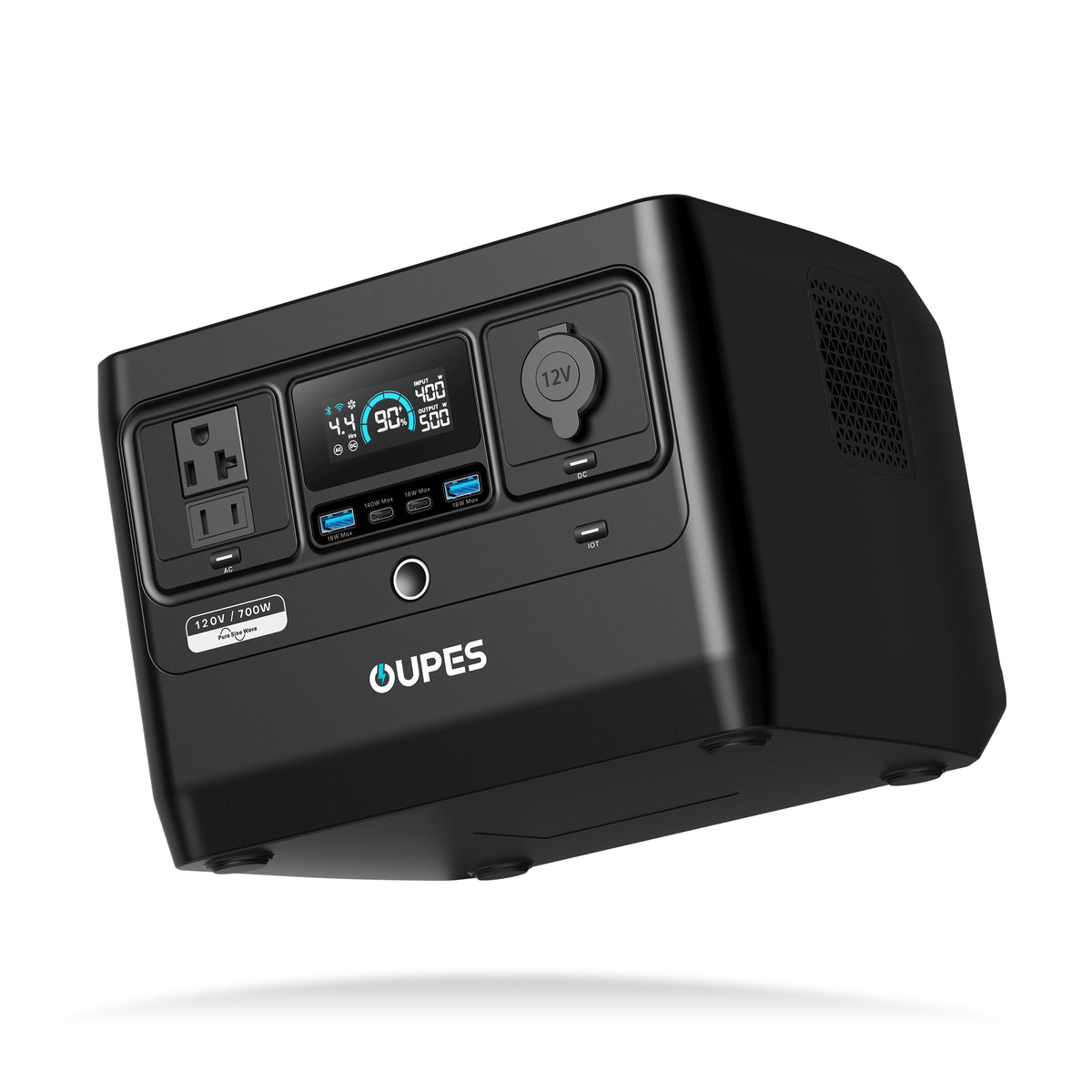
OUPES Exodus 700
- 576Wh rated capacity.
- 700W continuous AC output and 1,200W peak output.
- 13.9 lb with LiFePO4 battery chemistry.
- A practical value candidate for electronics, short trips and measured light loads.

OUPES Mega 1 Lite
- 1,024Wh rated capacity.
- 2,000W continuous AC output and 4,500W surge.
- Up to 800W solar input.
- Higher inverter output for users whose appliances exceed compact-station limits.

OUPES Mega 3
- 3,072Wh base capacity.
- 3,600W continuous AC output and 7,000W surge.
- Expandable up to 15.36kWh with compatible batteries.
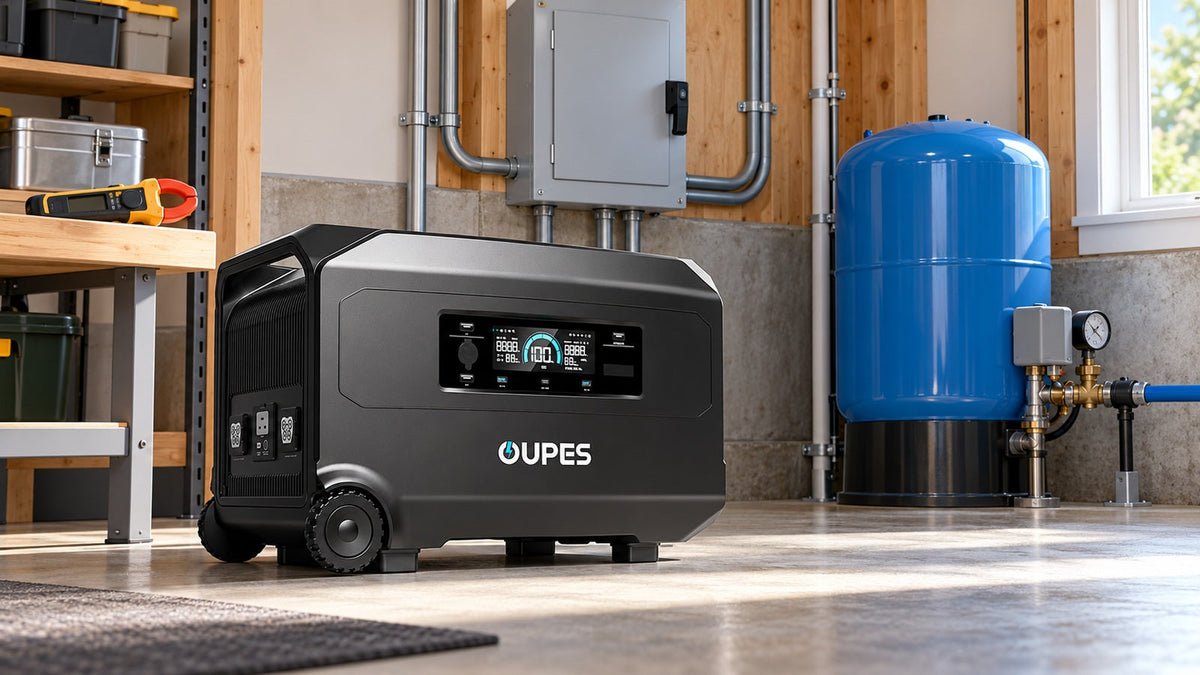
- A larger, expandable platform for substantial daily energy and output needs.
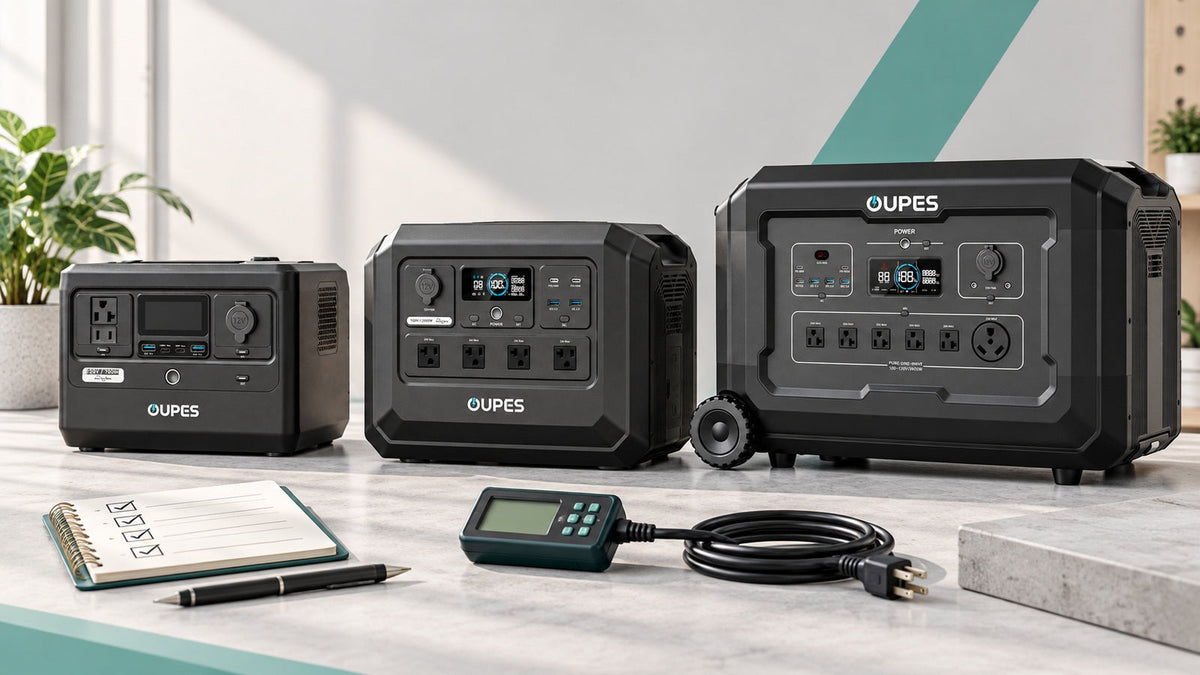
The compact model can be the strongest value when mobility and light loads dominate. The 1kWh model can be better when high output is necessary for short periods. The 3kWh model can justify its size where daily demand and expansion plans are real. Buying unused capacity is not automatically future-proofing; it is an added cost, weight and storage commitment.
Use a Repeatable Value Scorecard
Mark electrical compatibility as pass or fail. Then score the remaining candidates from one to five for runtime margin, recharge fit, portability, expandability, service confidence and complete cost. Weight the categories according to the job. A field photographer may weight mobility heavily, while a household backup plan may place more weight on runtime and expansion.
Keep assumptions beside the score. For example, write “refrigerator measured at 900Wh per day” or “four peak-sun-hours assumed.” This prevents attractive specifications from replacing the actual requirement and makes the decision easy to revisit when prices or loads change.
Frequently Asked Questions
Is the lowest price per watt-hour always the best value?
No. It matters only after output, voltage, ports, recharge and portability meet the intended use.
Should I compare sale prices?
Yes, but compare complete configurations on the same date and record what each bundle includes.
Does a higher surge rating make a station better?
Only when it safely supports the startup behavior of your actual load. Surge is temporary and does not replace continuous output.
How much capacity reserve should I include?
This guide uses 20% as an illustration. Increase the reserve when loads are uncertain or the next recharge is unreliable.
Is an expandable power station always a better buy?
No. Expansion adds value when you have a credible future energy need and compatible batteries remain practical to store and move.
How should I value fast charging?
Measure it against the time available between uses and the limits of the charging source. Speed you cannot use adds little value.
Does LiFePO4 automatically mean the longest service life?
Battery chemistry is one factor. Operating conditions, battery management, storage, depth of discharge and product support also matter.
Should solar panels be included in the comparison?
Include them when solar is part of the required recharge plan, along with compatible cables and mounting needs.
Can reviews replace load calculations?
No. Reviews may reveal usability patterns, but they cannot establish compatibility with your exact appliances and schedule.
What is the simplest final test?
Choose the lowest complete cost among systems that pass every hard requirement and provide an acceptable reserve, recharge plan and ownership experience.


Leave a comment
This site is protected by hCaptcha and the hCaptcha Privacy Policy and Terms of Service apply.