


A refrigerator runs around the clock, but it does not draw the same amount of electricity every minute. Its compressor cycles on and off, and actual energy use changes with room temperature, door openings, temperature settings, and the refrigerator’s condition. That is why a single wattage number cannot tell you exactly what a refrigerator costs to run or how long a battery will power it.
This guide explains the difference between running watts, starting watts, and daily energy use. It also shows how to measure your own refrigerator, estimate electricity costs, and choose backup power using the numbers that matter.
What Does Refrigerator Power Consumption Mean?
Two units appear frequently in refrigerator specifications: watts (W) and kilowatt-hours (kWh). They answer different questions.
- Watts describe power at a particular moment. For example, a refrigerator might draw a certain number of watts while its compressor is operating.
- Watt-hours describe energy consumed over time. A device drawing 100W continuously for one hour uses 100Wh.
- Kilowatt-hours are larger units of energy. One kWh equals 1,000Wh. Electricity bills and EnergyGuide labels commonly use kWh.
Because a refrigerator’s compressor cycles, its running wattage should not be multiplied by 24 hours to estimate daily use. The most useful figure for electricity costs and battery runtime is the refrigerator’s actual kWh consumed per day.
Running Watts, Starting Watts, and Daily Energy Use
Running watts
Running watts are the power drawn while the refrigerator is actively operating. The figure can vary as different components switch on, including the compressor, fans, defrost system, and ice maker. The electrical label on the appliance may show volts and amps rather than a single running-watt figure.
Starting watts
A compressor may briefly require more power when it starts than it uses while running. This short surge matters if you want to operate the refrigerator from a portable power station or generator. A backup source needs enough output capability to start the appliance as well as enough stored energy or fuel to keep it running.
Do not assume that every refrigerator has the same startup multiplier. Check the refrigerator manufacturer’s information and the backup power source’s specifications. If possible, test the exact combination before relying on it during an outage.
Daily energy use
Daily energy use is the total electricity the refrigerator consumes over 24 hours. It includes periods when the compressor is running and periods when it is off. This is the number to use when estimating monthly costs, solar requirements, and battery backup time.
How Many Watts Does an Average Refrigerator Use?
There is no single wattage that accurately describes every refrigerator. A compact model, an older household refrigerator, and a large refrigerator with an ice maker can have very different electrical requirements. Even two refrigerators of similar size can use different amounts of energy over a day.
If you need to know whether a power station can run your refrigerator, find the electrical requirements of your specific model. If you need to know how long it will run, measure its energy use over at least 24 hours or start with its EnergyGuide estimate. General wattage ranges are useful for rough comparisons, but they should not replace those model-specific figures.
How to Measure Your Refrigerator’s Actual Energy Use
A plug-in electricity meter is the most direct way to find daily consumption for a refrigerator that uses a standard compatible plug. Connect the meter according to its instructions, then use the refrigerator normally during the test.
- Record the meter’s starting kWh reading.
- Leave the refrigerator connected for at least 24 hours. Several days will provide a more representative average.
- Record the ending kWh reading and subtract the starting reading.
- Divide by the number of test days to estimate kWh per day.
For example, if the meter records 3.6 kWh over three days, the measured average is 1.2 kWh per day. At that rate, a 30-day month would use approximately 36 kWh. The actual monthly figure may change with weather and household use.
Check that the meter is rated for the refrigerator’s electrical load. If your appliance uses a connection that a plug-in meter cannot safely measure, consult the appliance instructions or an appropriate professional rather than improvising an adapter.
How to Estimate Consumption From an EnergyGuide Label
If you cannot measure your refrigerator, look for its estimated annual energy consumption on the EnergyGuide label or in the manufacturer’s documentation. Divide the annual kWh by 365:
Estimated daily kWh = EnergyGuide annual kWh ÷ 365
For a refrigerator labeled 400 kWh per year:
400 ÷ 365 ≈ 1.10 kWh per day
That figure is a planning estimate based on a standardized test. A refrigerator in a hot garage, one that is opened frequently, or one with a poor door seal may consume more. A measured reading under your normal conditions is preferable when you need a dependable backup power calculation.
Why Nameplate Watts Alone Can Mislead
The electrical nameplate helps identify the appliance’s requirements, but it does not show how long the compressor runs during a typical day. For example, multiplying a 200W running figure by an assumed ten hours gives 2 kWh. That arithmetic is correct only if the refrigerator actually draws 200W for ten hours and other consumption is accounted for. It should not be presented as a typical daily result without a measurement.
Likewise, multiplying 200W by 24 hours assumes a constant 200W load all day. A cycling refrigerator usually does not behave that way. Use measured kWh or an EnergyGuide estimate for daily consumption, and use running and starting requirements to check electrical compatibility.
What Affects Refrigerator Electricity Use?
Room temperature and location
A refrigerator generally has to work harder when the surrounding air is warm. Poor ventilation around the appliance can also make it harder to release heat. A refrigerator in a garage may therefore consume differently from the same model in a climate-controlled kitchen.
Door openings and food temperature
Opening the door allows warm air to enter. Placing a large quantity of warm food inside adds to the cooling load. These habits can change consumption from one day to the next.
Size, features, and age
Larger compartments and features such as ice makers can add to energy demand. Older equipment may also have less efficient components or worn seals. Compare actual kWh use rather than assuming that size or age alone determines the result.
Temperature settings and maintenance
Settings colder than needed may increase consumption. Damaged door seals and blocked airflow can make the refrigerator work harder. Follow the manufacturer’s instructions for temperature settings, cleaning, and ventilation.
How Much Does It Cost to Run a Refrigerator?
Once you know daily kWh, you can estimate electricity cost using your own utility rate:
Monthly cost ≈ daily kWh × days in the month × electricity price per kWh
Suppose your measured consumption is 1.2 kWh per day, the month has 30 days, and your electricity price is $0.15 per kWh:
1.2 × 30 × $0.15 = $5.40
This is an example calculation, not a universal electricity rate or a promised monthly bill. Taxes, time-of-use pricing, and changes in refrigerator use can affect your actual cost.
Can a Portable Power Station Run a Refrigerator?
A portable power station may run a refrigerator if three conditions are met:
- Its continuous AC output can support the refrigerator while it runs.
- Its startup capability can handle the compressor’s brief starting demand.
- Its usable battery energy is sufficient for the backup time you need.
Battery capacity is measured in Wh. The full rated capacity will not normally reach an AC appliance because the inverter and other system components use some energy. For an initial calculation, you can use a planning factor while making clear that it is an assumption rather than a measured efficiency figure.
Illustrative usable AC energy = rated battery Wh × 0.80
Suppose a refrigerator consumes 1.2 kWh per day. Its average energy consumption is 1,200Wh ÷ 24 = 50Wh per hour. A 1,024Wh battery at an illustrative 80% usable-energy allowance provides about 819Wh. Dividing 819Wh by 50Wh per hour suggests approximately 16 hours under comparable conditions.
That result is only a planning estimate. It assumes the power source can start the compressor, begins fully charged, and is not supplying other appliances. Refrigerator energy use may change with temperature and door openings, while inverter overhead and battery condition can change delivered energy.
Planning for a Longer Outage
If you want to power a refrigerator through a full day or longer, calculate the total energy needed for the entire period. Add any other essentials, such as a router, lights, or phone charging. Then decide how you will replenish the battery if the outage continues.
For example, a refrigerator using 1.2 kWh per day requires approximately 2.4 kWh over two days at the same daily rate, before accounting for AC conversion losses or other devices. A battery with 2.4 kWh of rated capacity would not necessarily deliver all of that energy to the refrigerator. Leave a practical margin and consider how conditions might change.
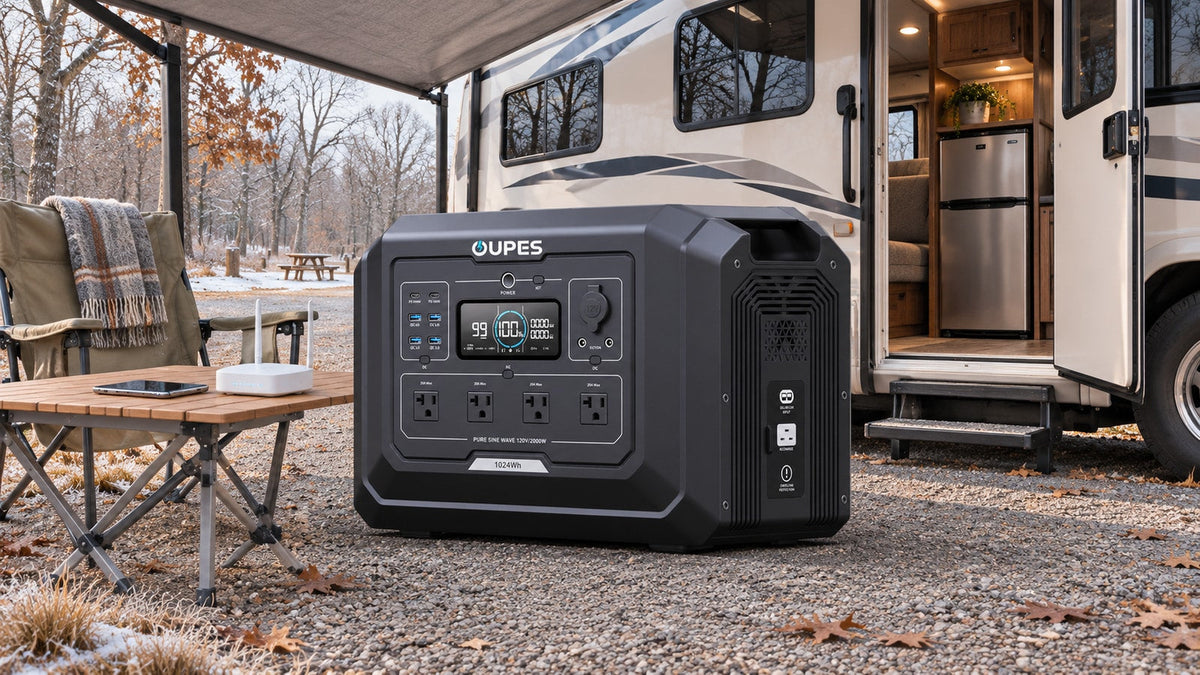
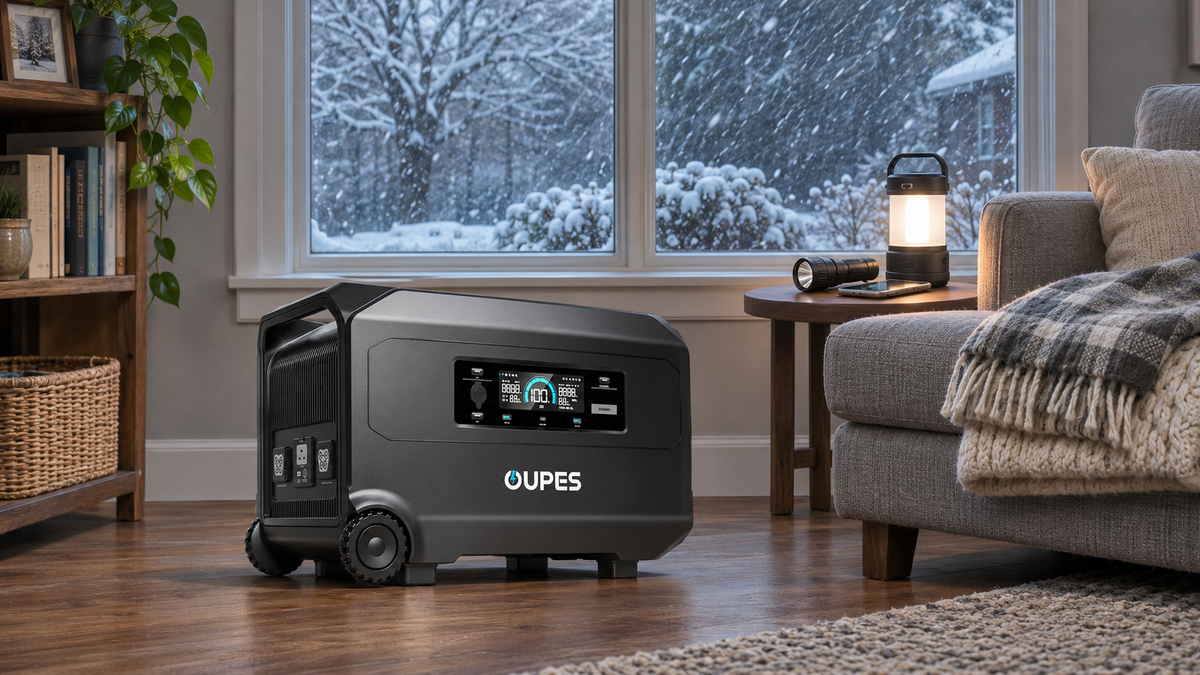
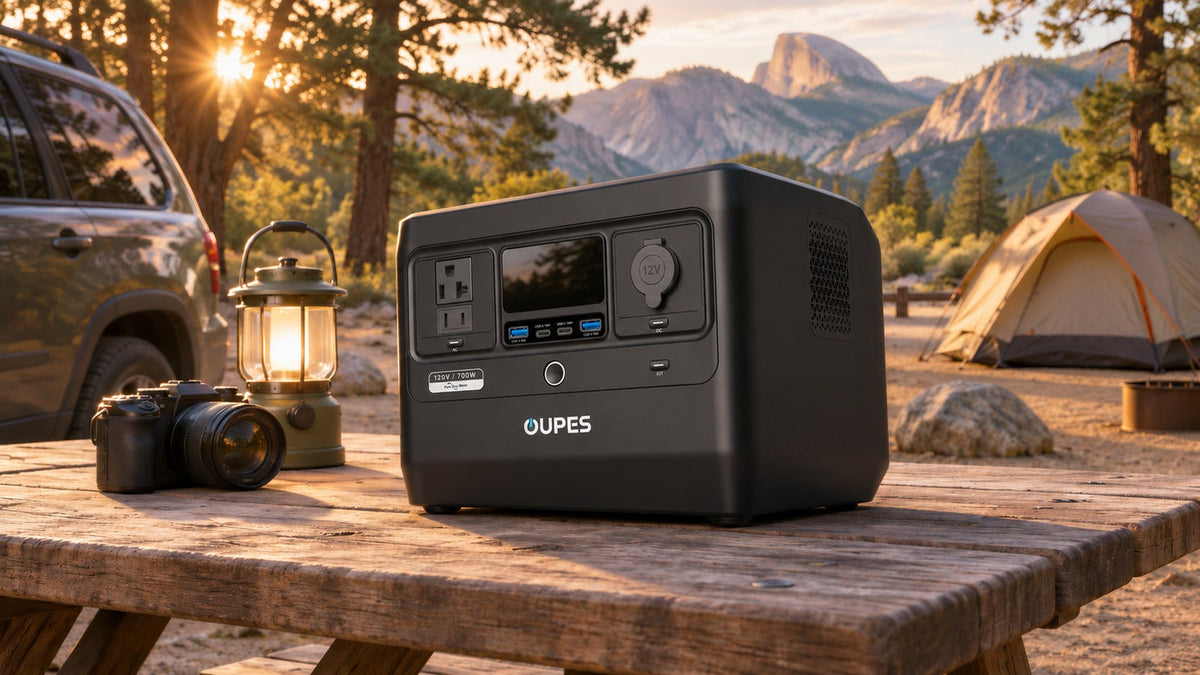
When comparing products, look at both battery capacity and output specifications. You can compare OUPES portable power stations, then check your refrigerator’s requirements against the specifications of the model you are considering.
How to Reduce Refrigerator Energy Use
- Keep the door seals in good condition and replace damaged seals according to the manufacturer’s guidance.
- Allow the ventilation space specified for your model.
- Avoid leaving the door open longer than necessary.
- Use appropriate temperature settings rather than making the compartments colder than needed.
- Follow the manufacturer’s cleaning and maintenance instructions.
If an older refrigerator appears to run unusually often, measure its kWh over several days. That gives you a clearer basis for deciding whether maintenance or replacement is worthwhile.
Frequently Asked Questions
Does a refrigerator use its rated wattage all day?
Usually not. Its compressor cycles, and other components operate at different times. Measure kWh over at least 24 hours to estimate daily energy use.
Can I calculate daily kWh from the refrigerator’s amps?
Amps and voltage help describe electrical demand, but they do not show how long each component operates. You need a measured energy reading or an annual energy estimate to make a useful daily kWh calculation.
Why does a refrigerator need more power when starting?
The compressor motor can briefly demand more power when it starts. Check the refrigerator and power source specifications rather than assuming a single startup figure applies to all models.
Can a 1,024Wh power station run a refrigerator overnight?
Possibly, but it depends on the refrigerator’s measured overnight energy use, its startup demand, other connected loads, and the power station’s usable AC energy. A 1,024Wh capacity rating alone cannot guarantee an overnight runtime.
Is the EnergyGuide estimate the same as my actual consumption?
No. It is a standardized estimate. Divide its annual kWh by 365 for a starting daily figure, then measure your refrigerator under normal use if you need a more reliable result.
Final Takeaway
For electricity bills and battery runtime, start with daily kWh. For electrical compatibility, check running and starting demand. Measuring your own refrigerator gives you a much stronger basis for choosing a power station or planning solar charging than relying on a generic wattage estimate.

Leave a comment
This site is protected by hCaptcha and the hCaptcha Privacy Policy and Terms of Service apply.