




To plan 24 hours of home backup, list essential devices, measure their daily watt-hours, add simultaneous and startup power requirements, divide the energy total by realistic usable-capacity and efficiency factors, then add contingency and a recharge plan. A common essential-load example can require roughly 3–4kWh of rated storage before optional heating or cooking.
Key Takeaways
- Use measured 24-hour Wh for refrigerators and cycling loads.
- Calculate inverter output separately from battery capacity.
- Add reserve after accounting for usable capacity and conversion efficiency.
- Solar and AC charging can reduce required storage only when they are realistically available.
- Fixed circuits require a proper transfer arrangement.
Choose the Loads That Must Last 24 Hours
Start with medical and accessibility equipment, refrigeration, communications, safe lighting and property-protection loads. Write down running watts, startup watts, hours and whether each load cycles. Separate optional cooking and comfort loads.
Measure the real refrigerator for a day when possible. Ambient temperature, thermostat setting and door openings change consumption.
Build a Reproducible 24-Hour Calculation
| Load | Assumption | Daily energy |
|---|---|---|
| Refrigerator | 60W average × 24h | 1,440Wh |
| Router/modem | 20W × 24h | 480Wh |
| LED lighting | 10W × 6h | 60Wh |
| Laptops and phones | Daily total | 400Wh |
| Total | 2,380Wh | |
Required nominal capacity at 90% usable fraction and 85% efficiency is 2,380 ÷ 0.765 ≈ 3,111Wh. Adding 20% contingency gives about 3,733Wh.
Verify Simultaneous and Startup Power
Add loads that may run together, then add the largest motor-start event. The refrigerator may average only 60W across a day while demanding several times its running power briefly at startup. A pump can be more demanding.
Confirm voltage and individual receptacle limits. Capacity cannot make a 120V-only station operate a 240V appliance.
Decide Whether Recharging Occurs During the Day
If a solar array reliably harvests 1,200Wh during the same 24 hours, net storage demand may fall—but only when the timing, weather and input limits support that energy. Do not subtract an optimistic solar forecast from critical reserve.
A 400W array × four peak-sun-hours × 0.75 system factor yields an illustrative 1,200Wh. Cloud and shade can reduce it substantially.
Compare Capacity Classes for the Example
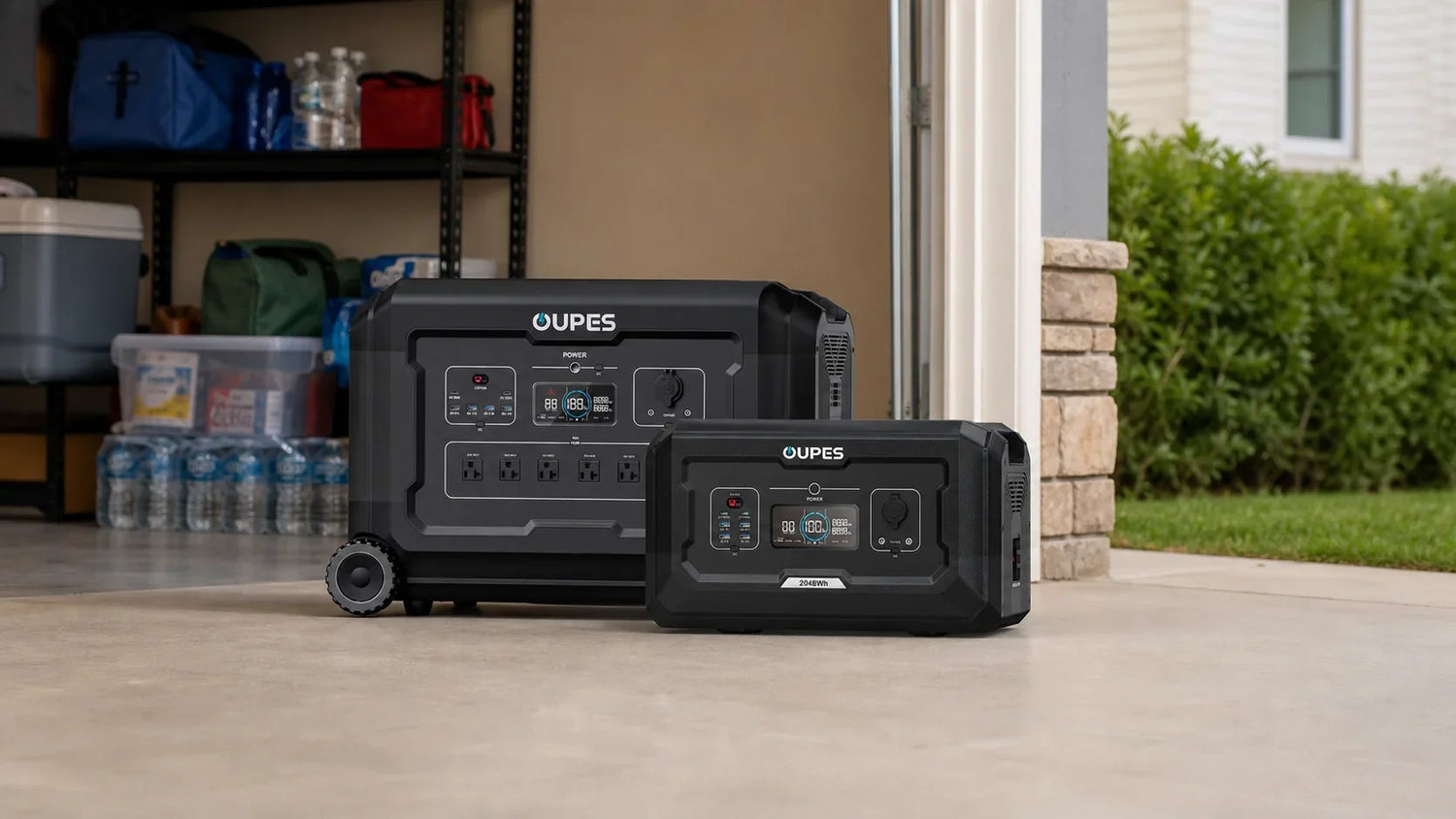
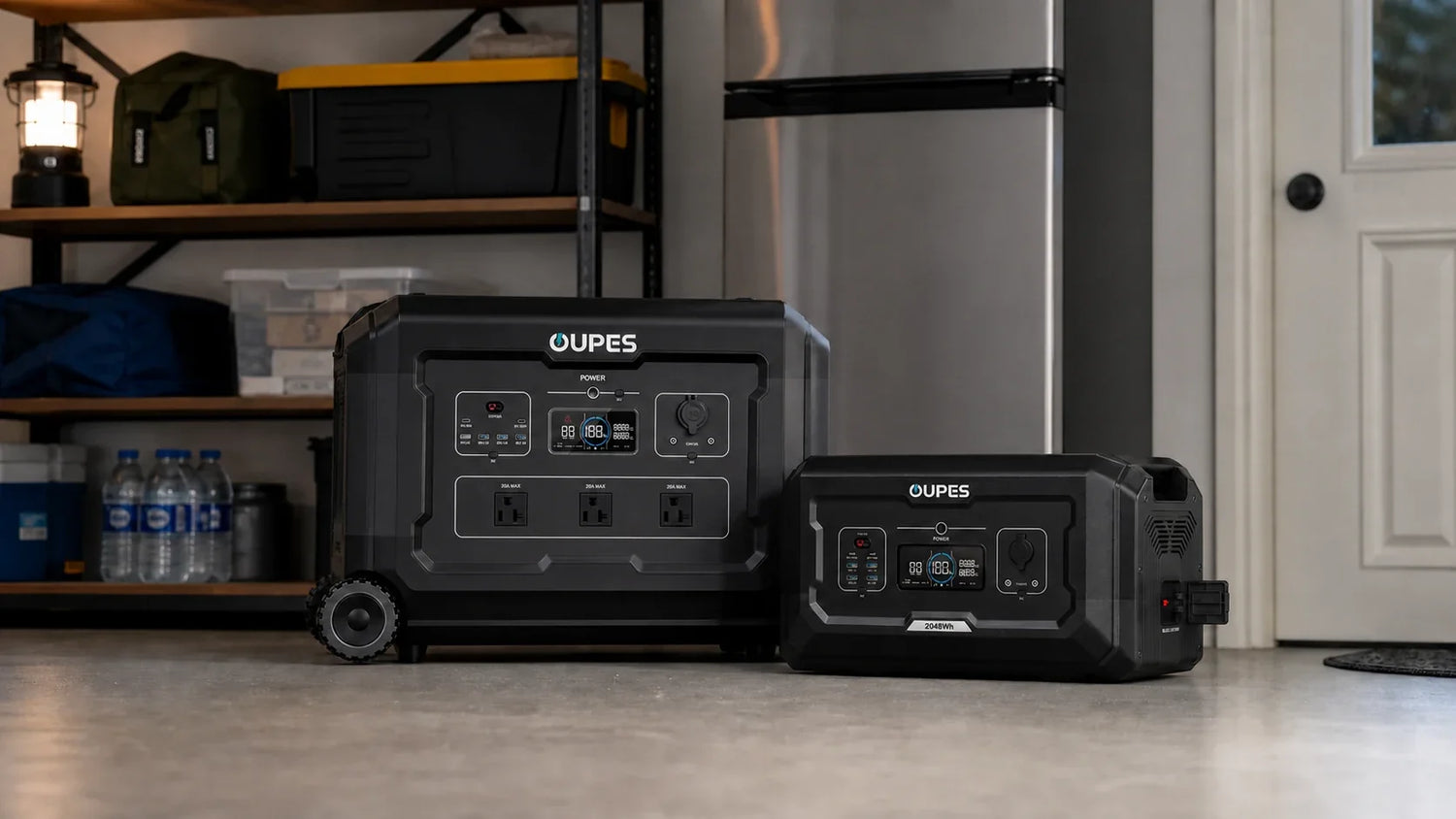
The 3,072Wh Mega 3 is near the calculated no-contingency requirement but below the example's 20% contingency target without recharge or load reduction. The 4,608Wh Guardian 6000 V2 provides more base energy and dual-voltage capability, subject to exact connection and output limits.

OUPES Mega 3
- 3,072Wh base capacity.
- 3,600W continuous AC output and 7,000W surge.
- Expandable up to 15.36kWh with compatible B2 batteries.
- A 3kWh expandable base for managed 24-hour essential loads.

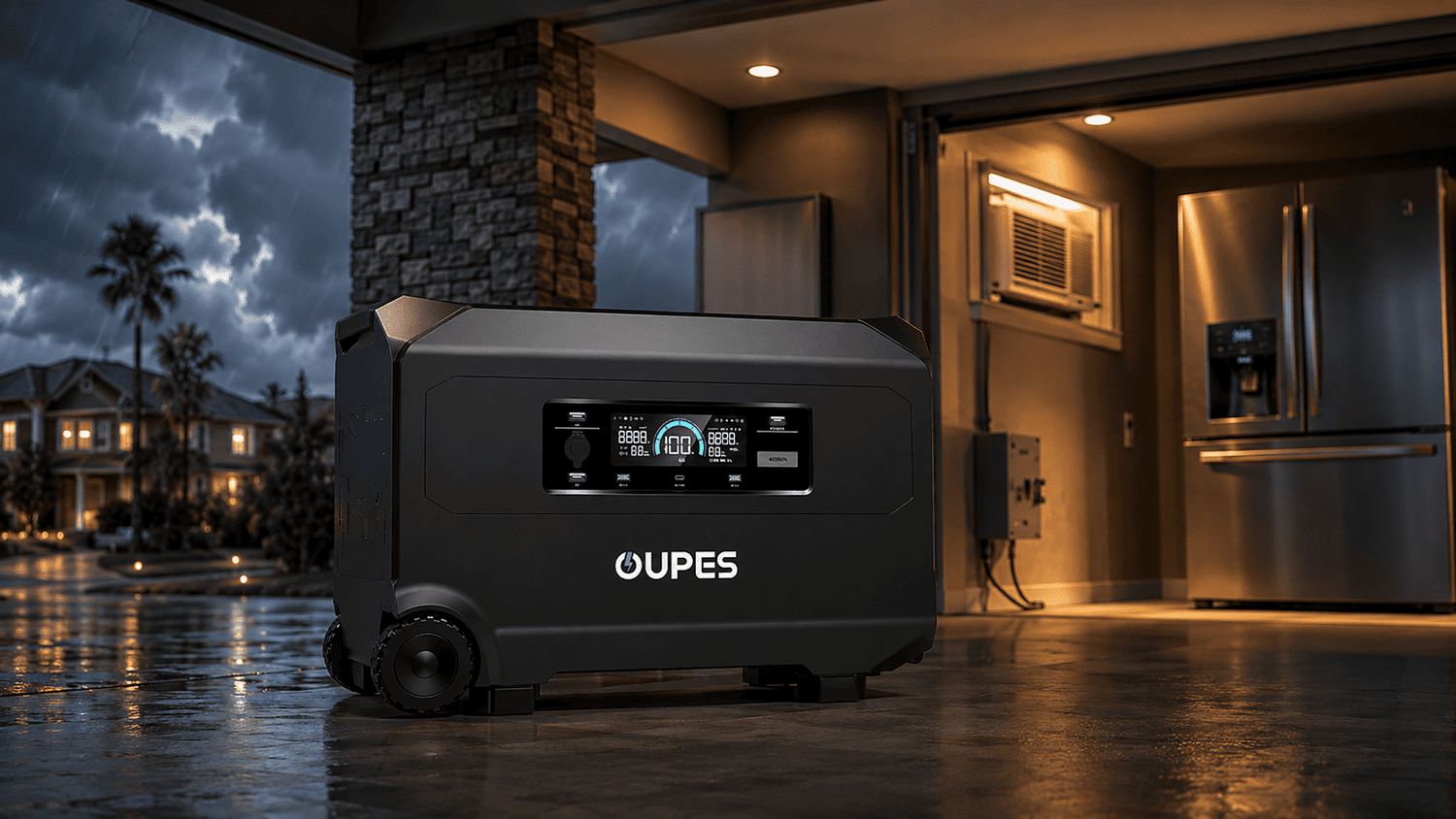
OUPES Guardian 6000 V2
- 4,608Wh base capacity.
- 6,000W at 240V and 3,600W at 120V, subject to outlet limits.
- Native 120V/240V dual-voltage output.
- A larger dual-voltage base for substantial household backup plans.
Test and Document the Plan
Run the selected loads for several representative hours, measure energy, confirm startup and time the recharge. Keep the station dry, ventilated and accessible. Label cords and write a sequence for shedding optional loads.
For building circuits, never backfeed a wall outlet. Use compatible transfer equipment designed and installed under applicable requirements. Review OUPES home backup systems only after the load plan is complete.
Run a Best-Case and Worst-Case Scenario
Calculate one day with expected cycling and favorable recharge, then a second with higher refrigeration use, no solar and an extra communication load. Size reserve from the consequence of the worse result rather than the average alone.
If the worst case is unaffordable or too heavy, define a load-shedding threshold and an alternate location for critical needs. The plan should state what happens before the battery becomes empty.
Frequently Asked Questions
Is 3kWh enough for 24 hours?
It can be for a managed load plan, but the example reaches about 3.1kWh before contingency.
How do I measure refrigerator energy?
Use a suitable energy meter over a representative day and record startup separately.
Should I include a 20% reserve?
It is a planning example, not a universal rule. Increase margin when recharge is uncertain or loads are critical.
Can solar reduce the battery size?
Yes when realistic harvest occurs during the coverage period, but critical plans need weather margin.
Can I include a space heater?
High-power heating can dominate the budget and may require a much larger system.
Does a larger battery increase inverter output?
Not necessarily. Output is a separate specification.
Can I power hardwired circuits directly?
Only through compatible transfer equipment and an appropriate installation.
What if utility power returns early?
The extra reserve remains useful; recharge according to the product guidance.
How often should I recalculate?
Whenever appliances, seasons, household needs or charging options change.

Leave a comment
This site is protected by hCaptcha and the hCaptcha Privacy Policy and Terms of Service apply.