




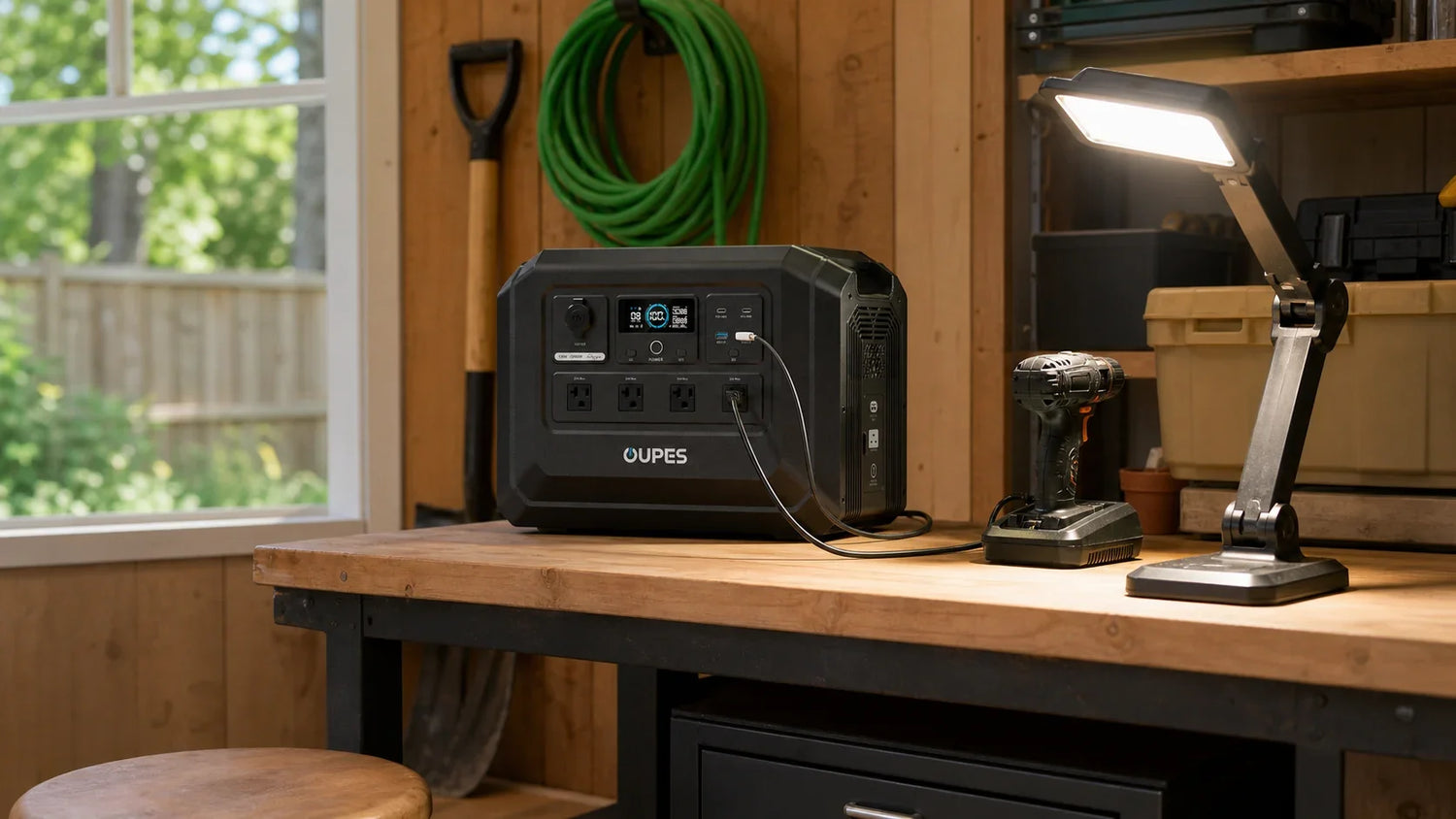
A portable power station can be useful in a shed for lighting, charging batteries, running electronics, and operating compatible small tools. Choose it by simultaneous watts, startup demand, and total watt-hours—not by tool count. The harder part is often the environment: sheds can become hot, cold, dusty, damp, and unattended, so the unit must be used and stored within its instructions.
This is a portable plug-in approach, not a permanent shed electrical installation. Do not backfeed wiring or build an improvised circuit. Fixed receptacles, buried cable, transfer equipment, or other building wiring should be designed by a qualified professional.
List Lighting, Charging, and Tool Loads
Start with the activities that happen in the shed. Basic loads may include LED lights, phone charging, a radio, camera batteries, or a laptop. Workshop loads might add cordless-tool chargers, a bench light, soldering equipment, a small fan, or corded tools. Record the rating from each nameplate or adapter.
Separate loads into continuous, occasional, and incompatible. Lighting may remain on throughout a session. A charger may operate for hours but draw modest power. A saw, drill, compressor, or shop vacuum may run briefly yet demand much more power. Equipment that exceeds the power station’s rating belongs on the incompatible list rather than being tested until a protection circuit trips.
Plan simultaneous use. One tool may fit, but the same tool plus chargers, lighting, and a heater may not. Scheduling high-power loads individually can reduce the inverter requirement and preserve runtime. Review the portable power station collection only after completing this list.
Calculate Power and Energy Separately
Watts determine what can run at once. Add the running watts of devices that may overlap and allow headroom. Watt-hours estimate duration. Multiply each load’s watts by expected hours, then add the results. A 20W light used for five hours consumes about 100Wh; a 600W tool used for ten minutes consumes about 100Wh before losses. The tool is harder on output, while both examples use similar theoretical energy.
Actual outlet energy is lower than nominal capacity because conversion, standby draw, temperature, battery condition, and cables introduce losses. Use a reserve rather than promising an exact runtime. If the shed session requires 600Wh on paper, selecting exactly 600Wh of nominal capacity leaves no practical margin.
Also consider how often the unit can be recharged. Carrying it back to the house after each session supports a smaller system. Leaving it in the shed between irregular visits requires more attention to storage temperature and state of charge, not simply more capacity.
Account for Startup Demand and Duty Cycle
Motor-driven tools can draw more power when starting. Check the tool manual and the power station’s supported output. Do not infer compatibility from average watts alone. A compressor that cycles may repeatedly create startup demand, while a resistive heater can consume high continuous power without a surge.
Duty cycle affects energy. A tool rated at 1,000W but used intermittently may consume less daily energy than a 100W device left on for many hours. Runtime estimates should reflect working time, idle time, and cycling. Measure actual use when the task is important.
If your shed functions more like a remote workshop, see the off-grid power station page. That scenario may justify a larger energy budget, solar charging, or professional fixed power rather than treating the shed as an occasional portable-power use.
Control Moisture, Heat, Cold, Dust, and Ventilation
A shed can exceed outdoor temperatures in direct sun and may become very cold in winter. Follow the unit’s documented operating and storage limits. Do not leave it in an extreme environment merely because it is not actively powering a load. Move it to a suitable location when conditions fall outside the instructions.
Place the power station on a stable, raised, dry surface away from leaks, wet floors, fertilizers, solvents, fuel, sawdust accumulation, and direct heat. Keep ventilation openings clear. The product is not an excuse to use electrical equipment in a damp area. Inspect the shed after rain and stop if cables or receptacles could be wet.
Route cords where tools, doors, wheels, and stored materials cannot crush them. Avoid daisy-chained adapters and damaged extension cords. Unplug the setup when work ends. The outdoor power station resource provides related portable-use context, but a shed still needs its own environmental check.
Build a Repeatable Shed Operating Routine
- Inspect the unit, cord, shed floor, and work surface for moisture or damage.
- Place the unit where vents remain open and the cable route is visible.
- Connect essential lighting first, then add one load at a time.
- Check displayed load and remaining battery rather than assuming runtime.
- Run high-power tools separately when possible.
- Disconnect loads, switch outputs off, clean dry dust, and store the unit correctly after use.
For emergency-preparedness overlap, keep shed tools separate from the household critical-load budget. A unit used for yard projects may be unavailable or partly discharged when an outage begins. The disaster preparedness page can help establish a separate home plan.
OUPES Mega 1 Lite for a Managed Shed Load Plan
Separate project energy from emergency readiness. If the same unit supports critical household loads, set a minimum state of charge below which shed projects stop. Otherwise, a long tool session can leave the backup plan depleted. A written threshold keeps the two uses from competing unexpectedly.
Dust control deserves a routine. Fine sawdust can collect around cables and ventilation openings. Place the unit away from cutting or sanding, stop work before cleaning, and follow the manufacturer’s care instructions. Never cover the unit while it is operating or blow debris deeper into openings.
The OUPES Mega 1 Lite Portable Power Station provides 1,024Wh capacity, 2,000W rated output, and support for up to 800W solar input. It is a standalone unit with no panel or expansion battery in the package. That output can cover many combinations of lighting, chargers, electronics, and compatible small tools, but every tool still needs to be checked.
The product table specifically excludes sustained loads over 1,000W from its intended scenario, even though the rated output is 2,000W. Treat that as an important use boundary for planning long-duration tool loads. Short operation and continuous operation are not the same. For family navigation, review the Mega Series collection.
A 1,024Wh battery does not guarantee a fixed number of workshop hours. A lighting-and-charging session may last much longer than a session dominated by a high-power tool. Calculate watt-hours, retain reserve, and monitor the actual display.
Keep a small shed load sheet beside the unit. Record each tool’s verified running rating, any startup requirement, and which other loads may remain connected. Update it when tools change. This prevents an occasional user from treating available receptacles as proof that every device can operate simultaneously.
If the shed is shared, post simple shutdown instructions and identify who returns the unit to its proper storage location. Accountability helps prevent a discharged battery, a connected tool, or a blocked vent from being discovered only when the equipment is needed again.
Frequently Asked Questions
Can I leave a power station in a shed year-round?
Only if the shed remains within the documented storage temperature and humidity conditions. Many sheds become too hot, cold, or damp. Inspect conditions and move the unit when necessary rather than assuming indoor storage is automatically suitable.
Can it run corded power tools?
Possibly, when continuous watts and startup demand fit the supported output. Check each tool and avoid overlapping high loads. Do not use a protection shutdown as a compatibility test.
How long will shed lights run?
Add the lights’ watts and divide usable battery energy by that load for an estimate. Conversion losses, other devices, temperature, and battery condition change the result. Efficient LED lighting usually consumes much less than workshop tools.
Can I wire the power station into shed outlets?
Do not improvise fixed wiring or backfeed a receptacle. Portable plug-in use is different from a building electrical system. Ask a qualified electrician about permanent outlets, grounding, permits, and code requirements.
Can I charge it with solar beside the shed?
Use only compatible panels and stay within input voltage, current, and connector limits. Keep the power station dry and shaded as instructed while panels receive sun. Do not run cables where they create trip or mower hazards.
Is a heater a good shed load?
Electric resistance heaters draw high continuous power and can drain a battery quickly. Check the exact rating and runtime calculation. Improving clothing, task scheduling, or the building envelope may be more practical than battery-powered heating.
Conclusion
A shed power plan begins with tasks, watts, watt-hours, and environmental limits. Use portable equipment only in a dry, ventilated, supervised setup and keep permanent wiring outside the scope. Mega 1 Lite provides useful output and a 1,024Wh energy class for managed lighting, charging, and compatible tools, provided continuous high loads are treated cautiously.
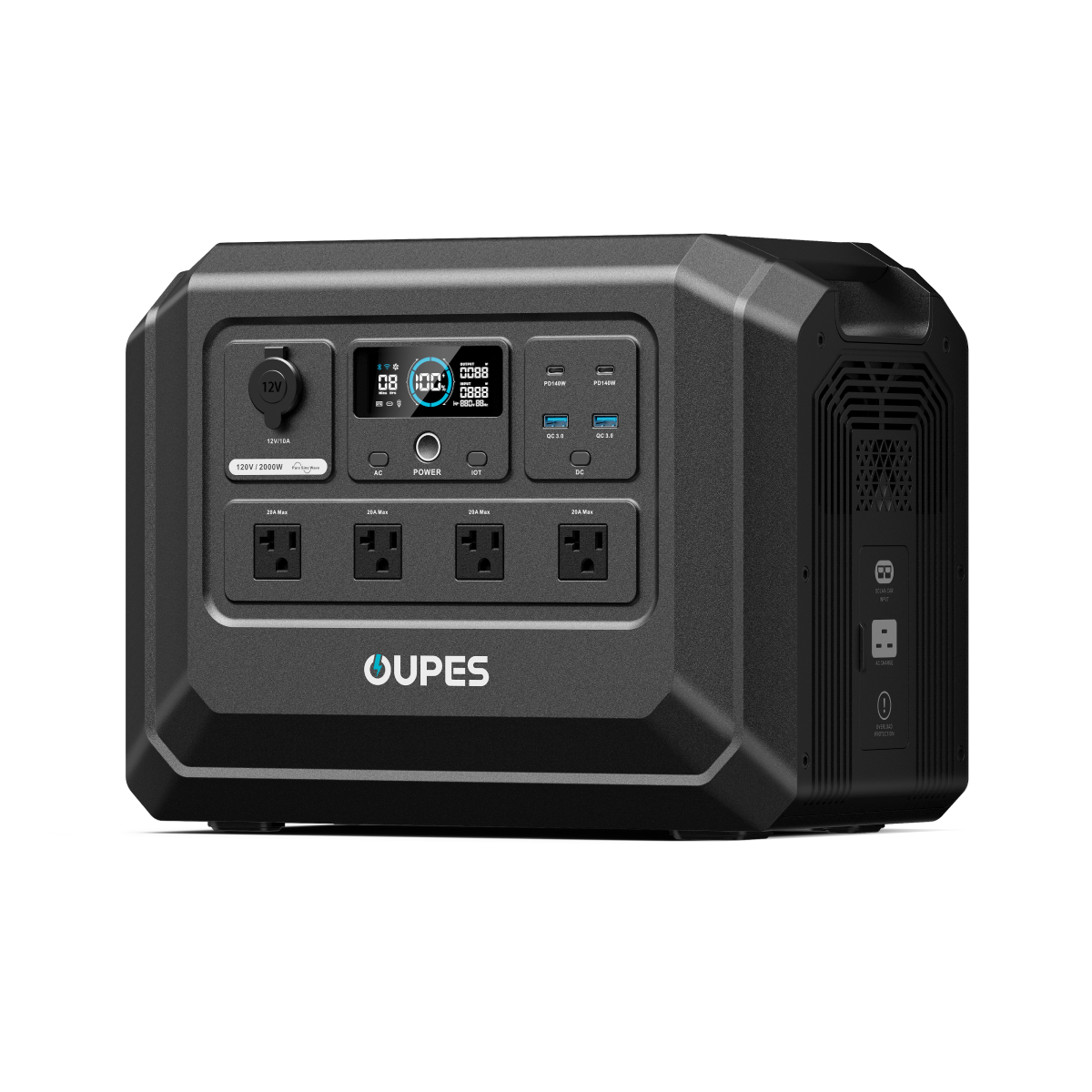
OUPES Mega 1 Lite Portable Power Station
- Standalone power station without panel or extra battery
- 1,024Wh battery capacity
- 2,000W rated output
- Up to 800W solar input


Leave a comment
This site is protected by hCaptcha and the hCaptcha Privacy Policy and Terms of Service apply.