




During a winter outage, protect people first: maintain a safe indoor temperature or move to a safer location if you cannot. Then reserve power for communication, refrigeration, lighting and any necessary equipment. Allocate battery energy by the consequence of losing each load, its actual watt-hours, and the next realistic recharge point. A winter energy-cost outlook does not predict that your home will lose power.
Key Takeaways
- Heating system controls and fans may require electricity even when the heat source is not electric; check the exact equipment.
- Portable resistance heaters can consume a small station's energy quickly. Do not make one your only cold-weather safety plan.
- A closed refrigerator buys planning time, but use a thermometer and food-safety guidance.
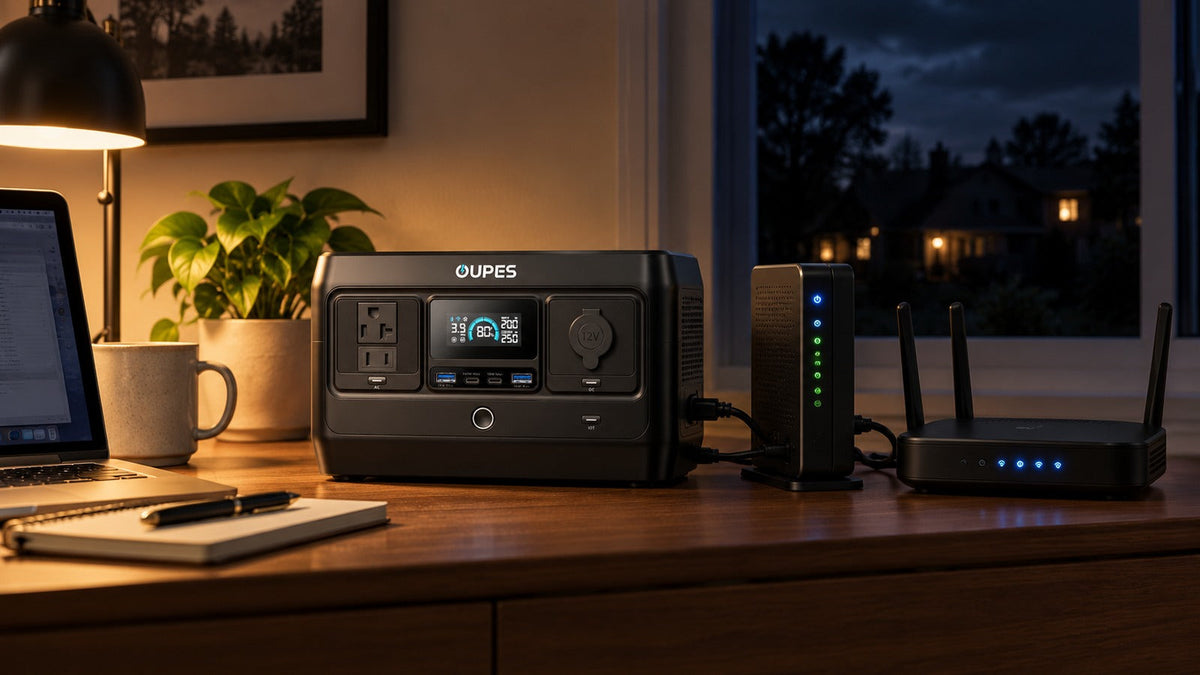
- Powering a router helps only while the provider's network remains available.
What the 2026–27 winter outlook does—and does not—say
The EIA Winter Fuels Outlook released October 6, 2026 forecasts household energy consumption, prices and expenditures by heating fuel under weather assumptions. It is useful context for thinking about winter energy needs, but it is not a storm forecast or a prediction of local outages. Prepare from your household's own vulnerabilities, local weather alerts, utility information and equipment manuals.
Set priorities by consequence and time sensitivity
| Tier | Examples | Decision |
|---|---|---|
| Immediate safety | Necessary medical or accessibility equipment; a safe temperature plan | Use manufacturer-approved backup and a relocation or help trigger |
| Communication | Charged phone, weather radio, router and network terminal | Keep an independent way to receive alerts |
| Food and home | Refrigerator, freezer, essential pumps | Measure temperature or hazard and allocate energy accordingly |
| Convenience | Entertainment, laundry, nonessential cooking | Schedule after the protected reserve |
The order can change. A rising-water pump or a medically necessary device may outrank refrigeration. A router that has lost upstream service may not justify continuous battery use.
Build an eight-hour essential-load budget
Use measured watts and actual hours. This demonstration assumes a refrigerator averages 75W over eight hours, a router and network terminal together use 20W for eight hours, one LED lamp uses 8W for five hours, and phone charging draws 10W for two hours. Energy is 600 + 160 + 40 + 20 = 820Wh. At an illustrative combined usable-and-conversion factor of 0.80, nominal station capacity needed is 820Wh ÷ 0.80 = 1,025Wh. This is a planning example, not a promised runtime or a specification for those appliances.
Check the highest simultaneous running watts and the refrigerator's starting demand separately. Reserve additional energy for a longer outage and losses that the simplified factor does not capture. If heating equipment needs electricity, add its measured duty cycle and power; do not hide it inside the 820Wh example.
Treat heat as a safety plan, not a single battery load
For fuel-fired central heating, controls, ignition and circulation equipment may still need electricity. Ask the system manufacturer or a qualified technician which parts may be powered by a portable supply and how to connect them. A 1,500W electric heater, by contrast, uses 1,500Wh for each hour at full output. Even a 3,072Wh nominal battery would have under two hours at that rate after an illustrative 80% combined energy factor; actual operation may be shorter. Use the heater manual, avoid unattended operation, and establish a safe place to go if the home cannot remain warm.
For food, FoodSafety.gov says a closed refrigerator keeps food cold for about four hours and recommends appliance thermometers. A four-hour reference is not permission to ignore a rising thermometer or delay a safe backup connection.
Test the connection and recharge plan
Use the station to power compatible plug-in loads directly. Do not backfeed a wall socket. Fixed circuits need a properly designed transfer arrangement installed according to local requirements. Test the actual device combination before winter, including startup loads, and note who will connect each item during an outage.
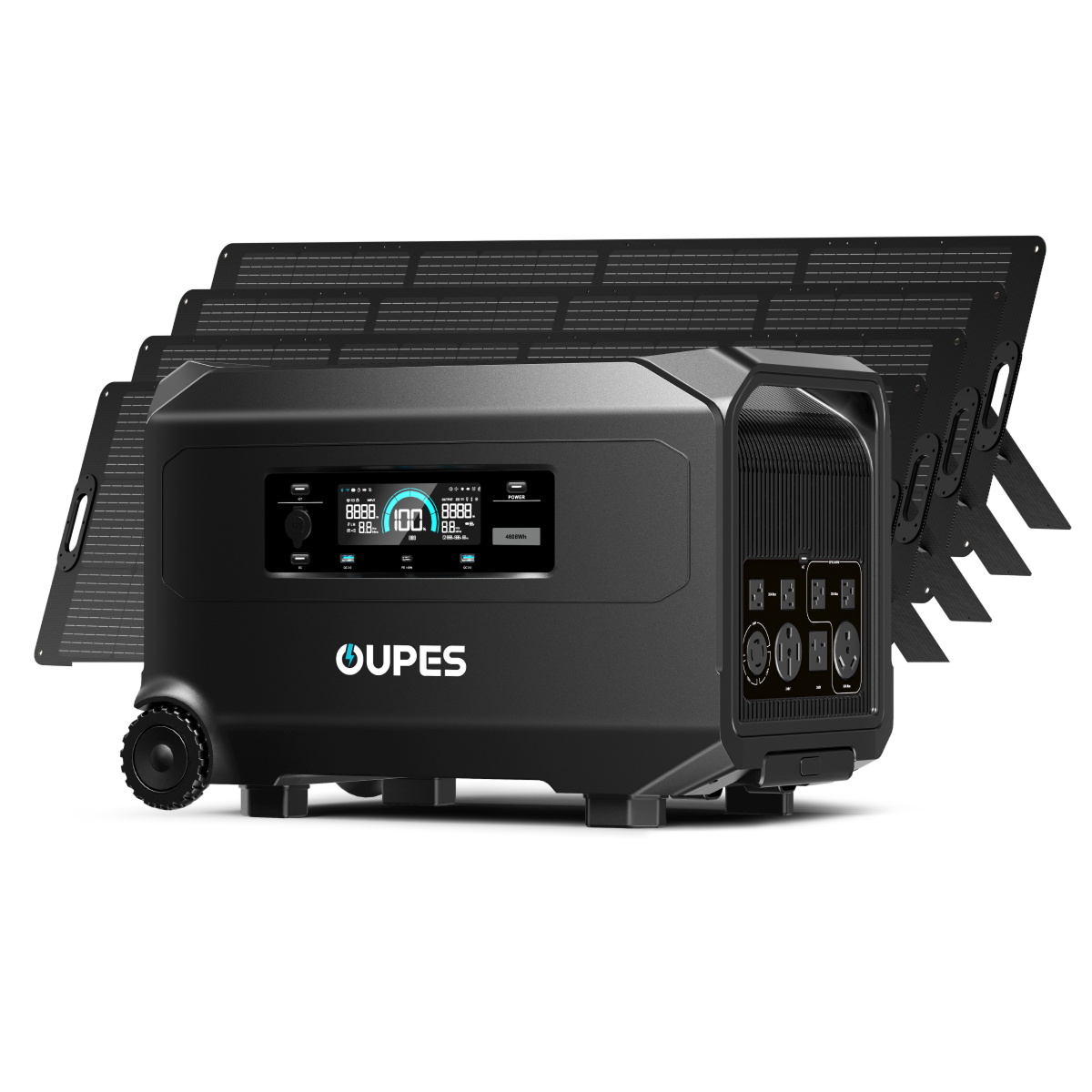
For larger selective-load plans, the US OUPES Mega 3 lists 3,072Wh capacity and 3,600W rated output. Its larger capacity may give more room for a measured essentials schedule, but it does not by itself provide whole-home heating or guaranteed uptime. Recharge availability, cold-weather storage, outlet limits and the load list still govern the plan.

OUPES Mega 3
- 3,072Wh nominal capacity.
- 3,600W rated AC output; check each outlet and startup load.
- Budget runtime from measured appliance energy.
Frequently Asked Questions
Does the EIA outlook mean outages are more likely this winter?
No. It forecasts fuel consumption and expenditures under weather scenarios; it does not forecast local electricity interruptions.
Should the heater always be first?
Safe temperature is a first-order concern, but the right action may be preserving a heating system's controls, adding insulation, or relocating—not running a high-watt portable heater from a small battery.
Will a powered router keep internet service?
Only if the provider's network and any required home network equipment remain operational.
Can extra battery capacity solve a startup overload?
No. Confirm the station's continuous, surge and outlet limits independently from capacity.



Leave a comment
This site is protected by hCaptcha and the hCaptcha Privacy Policy and Terms of Service apply.