




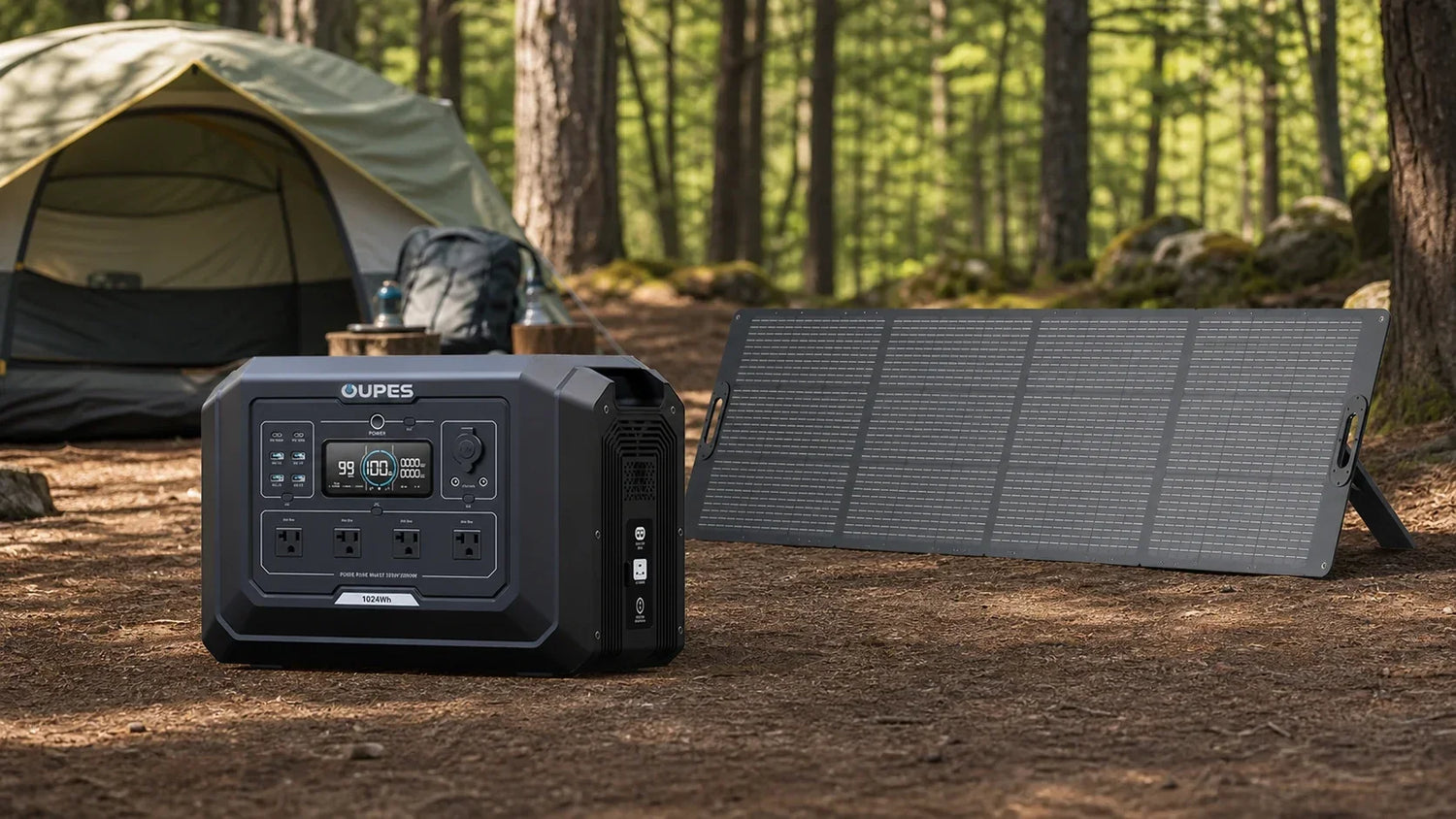
The right solar generator for camping is the one that supports your verified loads for the length of your trip and can be moved, stored, and recharged under real campsite conditions. Start with an appliance list rather than a product size. Then compare simultaneous watts, daily watt-hours, panel capacity, available sunlight, portability, and energy reserve.
A short tent trip with phones and lights needs a different system from a weekend with refrigeration and remote work. A high-load base camp may need more output, more stored energy, and more panel capacity—but larger equipment also takes more vehicle space and effort to position.
Start With Your Camping Appliance List
Write down every device you expect to use, then classify it as essential, scheduled, or optional. Essential loads might include communications, safety lighting, or equipment required for health. Scheduled loads may include a refrigerator, laptop, camera batteries, or a small cooking appliance. Optional loads are the first to pause when sunlight or remaining capacity is lower than expected.
For each item, record its input watts, expected hours of use, charging method, and whether it contains a motor or compressor. Use the device label, adapter, manual, or an appropriate meter. Avoid building the plan from generic wattage lists when the real equipment is available.
| Camping load | What to verify | Planning concern |
|---|---|---|
| Phones, lights, GPS, camera batteries | Charging Wh and daily frequency | Small loads can add up across several days |
| Laptop or portable monitor | Adapter input and work hours | Long sessions increase the energy budget |
| 12V cooler or refrigerator | Average energy and startup behavior | Cycling and ambient temperature affect use |
| Fan, pump, or tool | Running and startup watts | Motor startup may determine output needs |
| Coffee maker or cooking appliance | Actual input watts and minutes used | High demand can consume capacity quickly |
Calculate Running and Startup Watts
Watts describe power at a moment in time. Add the running watts of devices that may operate together and leave practical margin below the solar generator's rated output. A 60W laptop, 50W of lighting and communications, and a refrigerator drawing 100W while its compressor runs would represent approximately 210W at that moment. The actual values must come from your equipment.
Motor-driven loads may briefly need more power when starting. A cooler, refrigerator, pump, or tool might fit the continuous rating but still cause shutdown if its startup demand exceeds the system's supported behavior. Check manufacturer information and consider what else will already be running when that motor starts.
Scheduling reduces simultaneous demand. Run a short high-watt appliance when a refrigerator compressor is off, and avoid turning on several motor loads together. Output capability is separate from runtime: a 2,000W inverter may start a demanding appliance, but the battery's watt-hours determine how long the overall camp can operate.
Turn Daily Use Into Watt-Hours
Calculate energy for each device:
Daily energy in Wh = watts × hours used per day
Suppose lighting and communications average 40W for five hours, a laptop averages 65W for four hours, and a cooler averages 55W across 12 hours after cycling is considered. The basic daily total is 200Wh + 260Wh + 660Wh, or 1,120Wh. Add conversion losses, temperature effects, uncertainty, and a reserve rather than selecting a 1,120Wh battery as an exact match.
For a two-day trip, multiply daily needs by two unless reliable recharging is part of the plan. A useful estimate for a steady load is:
Estimated runtime = battery capacity in Wh × planning efficiency ÷ average load in W
An illustrative 85% planning factor can help prevent idealized math, but actual performance still depends on load, conversion path, temperature, battery condition, and operating behavior. Test the real camping setup before traveling far from an alternative power source.
Plan Solar Recharging Realistically
A solar panel's nameplate watts are not guaranteed continuous output. The U.S. Department of Energy explains that practical PV production changes with solar resource, time of day, season, the angle at which sunlight reaches the module, clouds, temperature, and severe weather in its guidance on optimizing solar photovoltaic performance.
At camp, shade from trees, mountains, tents, and vehicles can further change collection. Position panels only where permitted and safe, follow their operating instructions, keep them stable, and avoid blocking paths. Monitor actual input rather than assuming a 240W panel supplies 240W all afternoon.
Separate three numbers: battery capacity, the power station's maximum solar-input rating, and the panel wattage actually included in the kit. A power station may accept much more solar input than one bundled panel can provide. That input ceiling is not a statement about the contents of the package or the energy available on a cloudy day.
For multi-day camping, recharge essential loads first during favorable sunlight. Schedule optional device use after the battery has recovered, and retain enough energy for nighttime communications and lighting. If poor weather would make the trip unsafe without power, maintain a non-solar contingency.
Consider Portability and Campsite Use
Capacity and output usually come with added size and weight. Check current product dimensions and weight before buying, then confirm the unit fits the vehicle, trailer, or storage area. A kit with two panels also needs more deployment space than a one-panel kit.
Use the power station on a stable, dry surface with ventilation openings clear. Keep it protected from rain, condensation, dust, campfire heat, and vehicle traffic according to its manual. Route cables where they will not be pinched or create a trip hazard. Panels belong outdoors for collection; the power station should remain within its specified environmental conditions.
A Portable Power Station listing is generally the standalone main unit. A Solar Generator listing combines a power station with one or more solar panels. Home Backup Power bundles may include expansion batteries and are usually less focused on frequent campsite movement. Always read the exact kit composition instead of assuming “solar generator” means the same package across products.
Compare Three Camping Kit Levels
The US product table provides three Solar Generator kits that illustrate short-trip, weekend, and higher-load directions. These are planning categories, not universal recommendations.
| Kit | Composition | Capacity | Rated output | Included panel power |
|---|---|---|---|---|
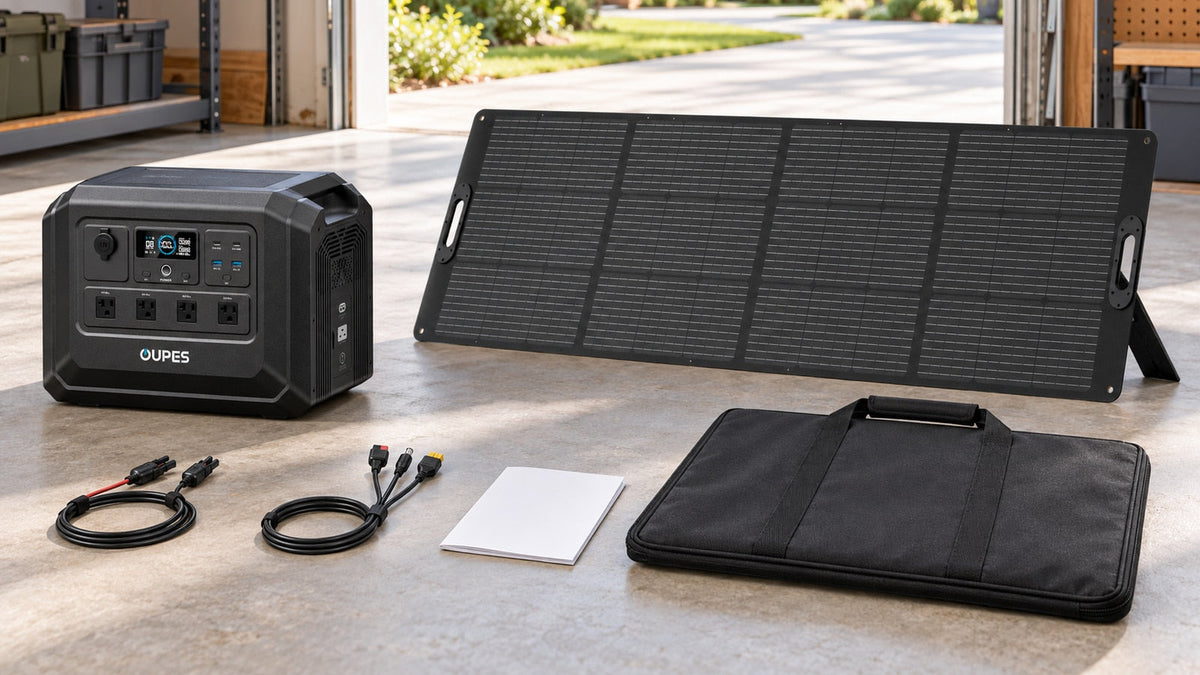
| Mega 1 Solar Generator Kit | Mega 1 ×1; 240W panel ×1 | 1,024Wh | 2,000W | 240W |
| Mega 2 Solar Generator Kit | Mega 2 ×1; 240W panel ×1 | 2,048Wh | 2,500W | 240W |
| Mega 3 Solar Generator Kit | Mega 3 ×1; 240W panels ×2 | 3,072Wh | 3,600W | 480W total |
The Mega 1 kit is the most focused choice here for shorter trips and carefully managed electronics, lighting, refrigeration, and occasional compatible appliances. The Mega 2 kit doubles stored capacity and increases rated output for longer sessions or a broader load list. The Mega 3 kit adds another capacity step, higher output, and two included panels for a high-load base camp where the extra transport and setup requirements make sense.
The power stations support solar-input limits higher than the panels included in these packages: 800W for Mega 1 and up to 2,100W for Mega 2 or Mega 3 according to the product table. Those are main-unit limits, not included solar wattage or guaranteed collection.
Camping Purchase Checklist
- List actual devices, label watts, startup demand, and daily operating hours.
- Calculate simultaneous watts separately from total watt-hours.
- Add losses, uncertainty, and an overnight or emergency reserve.
- Confirm the exact number and wattage of panels included.
- Estimate realistic sunlight and identify shade at the campsite.
- Check weight, dimensions, vehicle space, cable length, and deployment area.
- Review campground rules and all equipment manuals before setup.
- Test the complete load and charging plan before departure.
Frequently Asked Questions
What size solar generator do I need for camping?
Add the watt-hours required by every device for each day, include losses and reserve, and separately verify simultaneous and startup watts. A phone-and-light trip may need far less than a trip with refrigeration, laptops, pumps, or cooking equipment. Trip length and realistic solar recovery also affect the required size.
Is 1000Wh enough for a weekend camping trip?
It can be enough for a carefully managed load list, but the label alone cannot answer. Calculate two days of device energy, subtract realistic losses, and keep an overnight reserve. Refrigeration, remote work, poor weather, and high-watt appliances can push the need above that capacity.
Can I use the power station while solar panels are charging it?
Follow the specific product manual and input/output limits. Even when simultaneous charging and use are supported, connected loads reduce net battery recovery. Monitor actual solar input and load, keep within operating conditions, and avoid assuming daytime use is “free” simply because a panel is connected.
How long does a 240W panel take to recharge 1024Wh?
Capacity divided by panel rating gives only an ideal lower bound. Real time is longer and variable because sunlight, angle, shade, clouds, temperature, cable losses, charging behavior, and loads operating during charging all matter. Monitor collected watts and watt-hours under actual campsite conditions.
Can a camping solar generator run an electric heater?
A heater may fit an inverter's watt rating, but resistance heating consumes stored energy rapidly. Compare the heater's actual input with continuous output and calculate watt-hours for the intended time. In limited-capacity camping plans, insulation, suitable clothing, and approved non-electric strategies may preserve power for essential loads.
Should I buy a standalone station or a solar generator kit?
Choose a standalone power station if you already have a compatible charging plan and do not need bundled panels. Choose SOUO solar powered generators when the included panel configuration fits your trip. Verify kit composition, because the station's maximum solar-input rating does not show what panels are included.
Conclusion
Choose a solar generator for camping by calculating the trip, not by chasing the largest specification. Verify watts and startup demand, build a daily watt-hour budget, estimate solar conservatively, and account for transport and safe setup. A matched kit gives you enough energy and charging flexibility without carrying equipment that your campsite plan does not need.
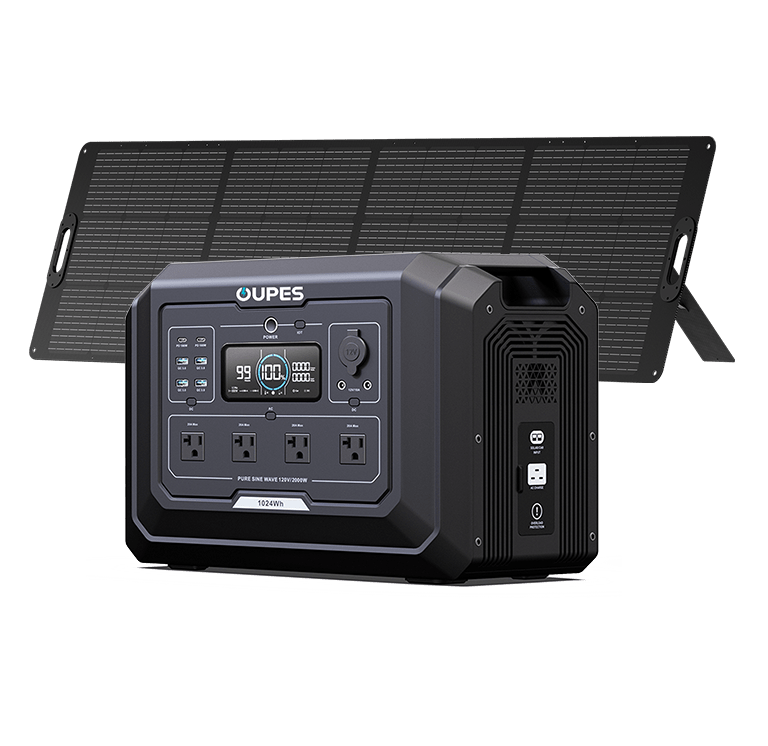
Mega 1 + 240W Solar Panel Solar Generator Kit
- Mega 1 power station plus one 240W solar panel
- 1,024Wh capacity for planned camping loads
- 2,000W rated output for compatible devices
- Up to 800W solar input supported by the main unit

Leave a comment
This site is protected by hCaptcha and the hCaptcha Privacy Policy and Terms of Service apply.