




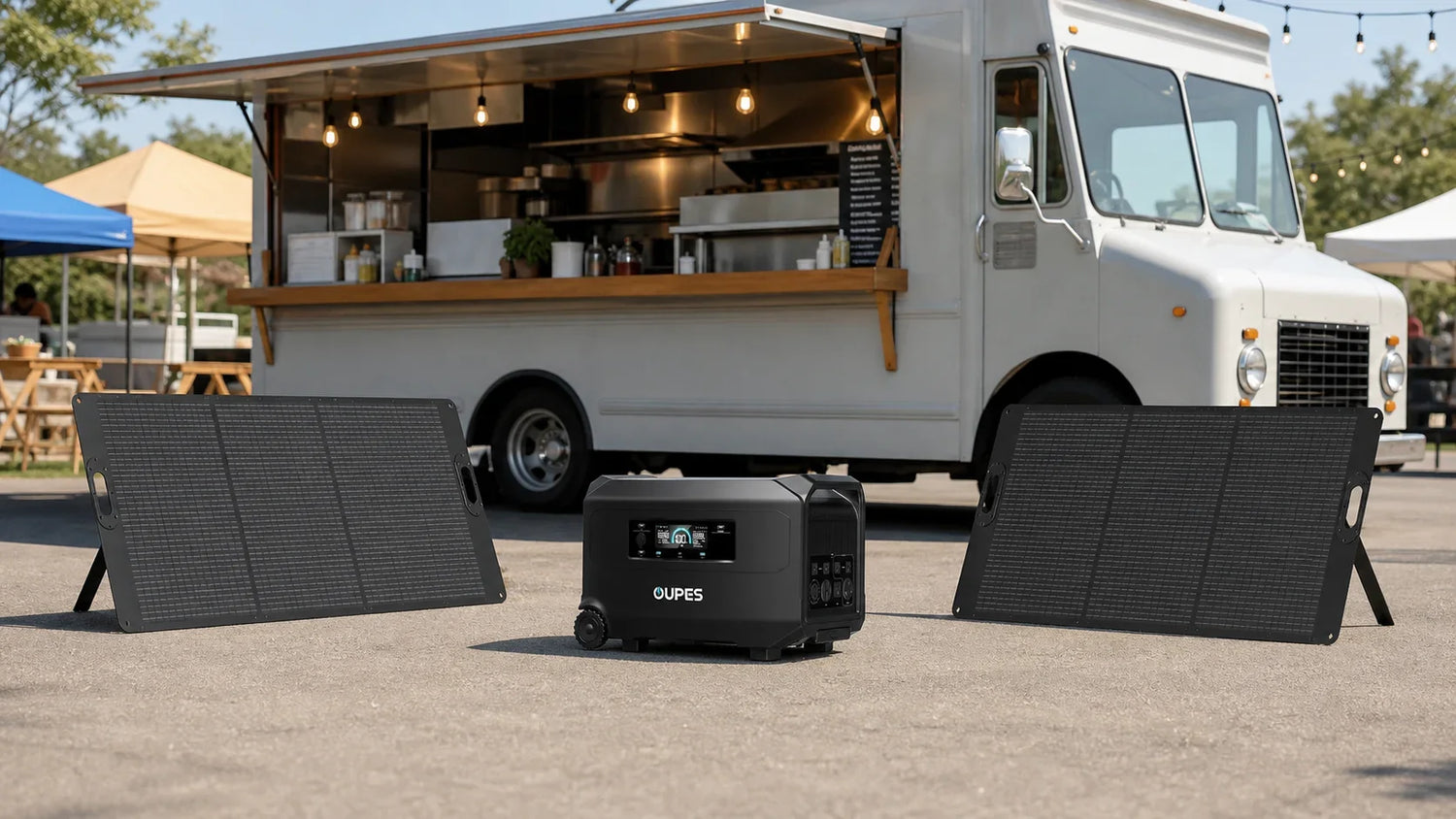
Yes, a solar generator can power some or many food-truck loads when their combined running watts, startup demand, and daily energy fit the system. It cannot be assumed to power every truck. Refrigeration, cooking, ventilation, water pumps, lighting, and point-of-sale equipment create very different profiles, and electric cooking can dominate the plan.
The correct answer comes from equipment nameplates and an operating schedule. This guide explains that calculation and uses the Guardian 6000 V2 solar kit as a high-power example. It does not replace local health, fire, electrical, or event rules, and it does not provide fixed vehicle-wiring instructions.
Quick Answer: It Depends on the Menu and Equipment
A beverage or cold-service truck with efficient refrigeration, lights, a water pump, and POS equipment may fit a battery system more easily than a truck using electric griddles, fryers, ovens, or large air conditioning. A 6,000W power station may support a substantial combination of loads, but 6,000W describes output, not how long the battery lasts.
Start with three limits: continuous rated output, startup demand, and watt-hour capacity. Then examine charging. Solar can extend operation, but two included 240W panels total 480W of nameplate panel capacity and cannot automatically replace several kilowatt-hours consumed during a busy service.
Inventory Every Load by Nameplate
Walk through the truck and record refrigerators, freezers, warmers, cooking appliances, exhaust or ventilation equipment, water pump, lighting, POS terminal, router, chargers, and any climate-control load. Use the exact nameplate, manual, or manufacturer documentation. Do not rely on generic web estimates for commercial equipment.
Add operating hours and duty cycle. A refrigerator compressor cycles; a warmer may run for most of service; a blender may operate for minutes; a POS terminal uses modest power for many hours. Keep legally or operationally essential food-safety loads separate from convenience loads so they receive first priority.
Food trucks vary by jurisdiction. The FDA’s directory of state retail and food-service codes shows that requirements are administered through state and local frameworks. Confirm the authorities governing the truck’s home base and each event location.
Calculate Simultaneous Watts and Startup Demand
Add the running watts of equipment that can operate together during peak service. Then identify compressors, pumps, and motors with startup demand. If cooking appliances, refrigeration, water pump, and ventilation overlap, the total can be much larger than any single nameplate.
Sequencing can reduce the peak. A prep appliance may operate before service rather than while every cooking appliance is energized. That operational choice must remain compatible with food-safety and service requirements. Never switch off required refrigeration merely to fit an undersized power system.
Keep headroom. Designing exactly to the rated output leaves no space for cycling loads or an added appliance. Equipment whose demand is uncertain should be measured by a qualified technician. A protection shutdown during service is not an acceptable sizing method.
Calculate Watt-Hours for the Entire Service Window
Multiply watts by hours for each load and add the results. A 200W load for eight hours represents 1,600Wh; a 1,500W appliance used for twenty minutes represents about 500Wh. Add preparation, service, cleanup, and travel-related use rather than counting only customer-facing hours.
Nominal battery capacity is not fully available at the AC outlet. Allow for inverter conversion, standby power, temperature, battery condition, and cycling. Build a normal day and a peak day. If the battery cannot cover essential refrigeration and shutdown procedures on the peak day, the plan needs more stored energy, another charging source, or a smaller electrical menu.
The home backup collection illustrates expansion-battery packages when duration is the main constraint, while the solar generator collection focuses on packages that include panels.
Understand What Solar Can and Cannot Do
Solar adds energy over time; it does not raise the battery’s rated AC output. Field production varies with sun, shade, season, temperature, panel angle, weather, and available setup area. At an event, tents, buildings, vehicles, and customer movement may restrict safe panel placement.
Keep panels outside traffic paths and secure them against movement. Route compatible cables where they cannot be crushed or create a trip hazard. Keep the power station dry and ventilated. Review the portable solar panel collection for supported equipment, but always confirm voltage, current, connectors, and configuration limits.
A 480W included array should be compared with the truck’s daily watt-hour deficit. If the truck uses 8,000Wh during service, a few hours of variable 480W input will not replace all consumption. Start the day charged and treat solar as replenishment, not a guarantee of uninterrupted operation.
Guardian 6000 V2 Solar Kit Planning Example
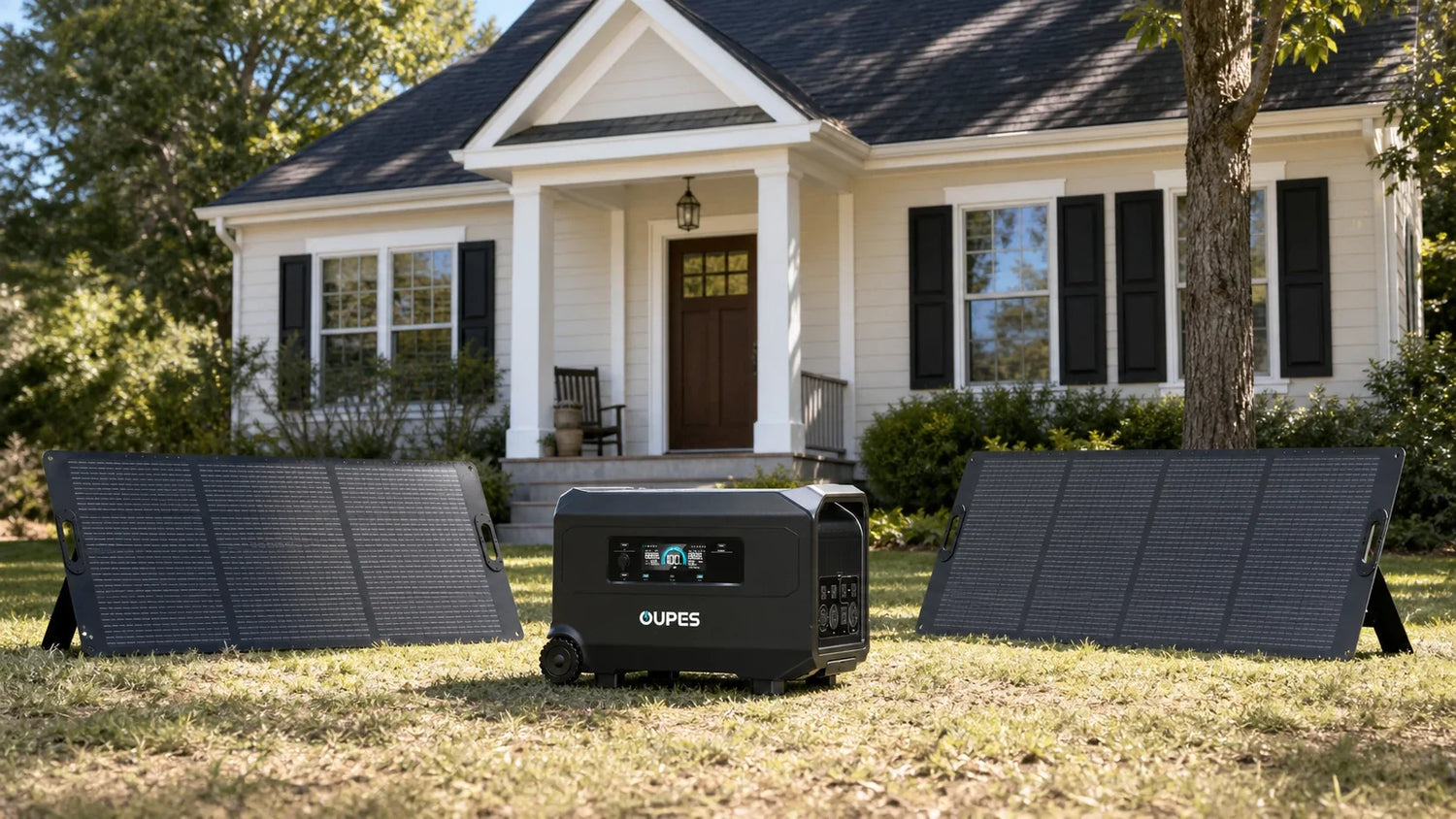
The Guardian 6000 V2 + 2×240W Solar Panel kit includes one 4,608Wh power station and two panels totaling 480W. The main unit provides 6,000W rated output and supports up to 3,600W of solar input, but the included panels remain 480W. This distinction is essential when estimating recharge.
Imagine a cold-service plan totaling 2,800Wh over preparation and service, with a peak overlap below 3,000W after verified startup demand. That model may fit within the kit on paper with reserve, although real operation must be tested and monitored. A cooking-heavy plan totaling 10,000Wh with multiple simultaneous heating appliances does not become suitable merely because peak output is below 6,000W; stored energy would be the binding limit.
The US home solar generator page offers broader storage-and-solar context, while the Guardian product selection must still use the local product documentation and truck-specific measurements.
Plan Compliance and a Safe Operating Routine
Ask the local health department, fire authority, event organizer, and qualified electrician which requirements apply. Food temperature control, ventilation, fire suppression, wiring, cable protection, and approved equipment may affect the design. Do not assume that replacing a fuel generator removes every inspection obligation.
Document the energy plan for staff. Mark which outlets serve refrigeration, which appliances may operate together, and what to do when load or remaining charge crosses a threshold. This prevents someone from adding an appliance during peak cooking without realizing a compressor may start simultaneously.
Create a backup service plan: a reduced menu, a safe alternative source, or an orderly shutdown that protects food and equipment. Solar production and customer volume are uncertain, so required food-safety operations cannot depend on perfect sunlight or an exactly predicted duty cycle.
Create a startup checklist: equipment dry and undamaged, battery charged, panels secured, cables protected, ventilation clear, essential loads connected first, and displayed load monitored. Create a shutdown plan that preserves refrigeration and completes cleaning. Keep a contingency for poor solar conditions or unexpected demand.
Do not connect the unit to fixed truck wiring unless the arrangement is professionally designed and approved. Portable plug-in loads are easier to evaluate because each device can be traced to a documented outlet and rating.
Use logged data to improve the plan. Record starting charge, peak displayed watts, ending charge, weather, service duration, and any load that cycled unexpectedly. Several representative service days reveal whether the system has dependable margin. Recalculate before changing the menu, adding refrigeration, or moving to a longer event.
Before every event, confirm the permitted equipment layout and available footprint. A site that cannot safely accommodate two panels may require a different charging plan, even when the electrical calculations are otherwise sound.
Frequently Asked Questions
Can it run an electric griddle or fryer?
Possibly, if the exact appliance and all overlapping loads fit rated output, but heating appliances consume energy quickly. Calculate both peak watts and service-window watt-hours. Many cooking-heavy trucks need another energy strategy.
Can solar panels recharge during service?
Yes, when safely placed and compatible, but output varies. Compare expected energy harvest with consumption and do not block customer or emergency paths. Begin service with a charged battery.
How do I size for refrigeration?
Check running and startup power and measure energy across the actual ambient temperature and duty cycle. Keep required cold holding prioritized; never disable it merely to extend battery runtime.
Is 6,000W enough for a food truck?
It is enough only when the verified simultaneous and startup loads fit. It says nothing by itself about duration. A truck can remain below 6,000W and still consume more than the battery stores.
Do I still need inspections?
Potentially yes. Power source is only one part of food-service compliance. Contact state and local health, fire, electrical, and event authorities for the exact truck and operating location.
Can I wire the unit into the truck?
Do not improvise fixed wiring. Integration may involve grounding, overcurrent protection, connectors, permits, and inspection. Use qualified professionals and approved equipment.
Conclusion
A solar generator can power a food truck only after the menu, appliance nameplates, overlap, energy use, and operating rules are known. Guardian 6000 V2 offers 6,000W output and 4,608Wh capacity with two 240W panels, making it a strong candidate for verified moderate-to-high loads—not a promise to run every truck.
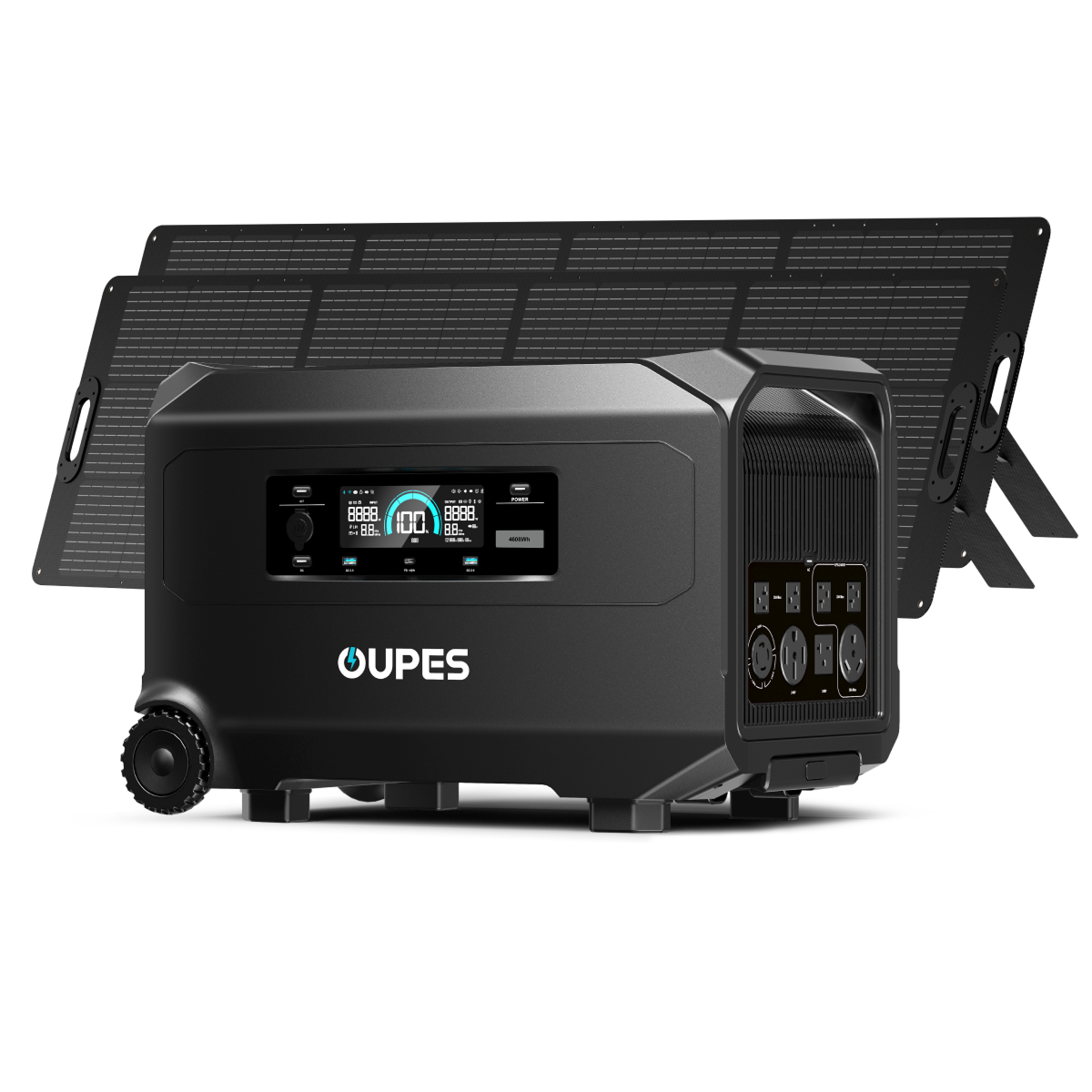
Guardian 6000 V2 + 2×240W Solar Panel Solar Generator Kit
- Guardian 6000 V2 with two 240W panels
- 4,608Wh battery capacity
- 6,000W rated output
- Up to 3,600W solar input supported by the main unit


Leave a comment
This site is protected by hCaptcha and the hCaptcha Privacy Policy and Terms of Service apply.